Foresight
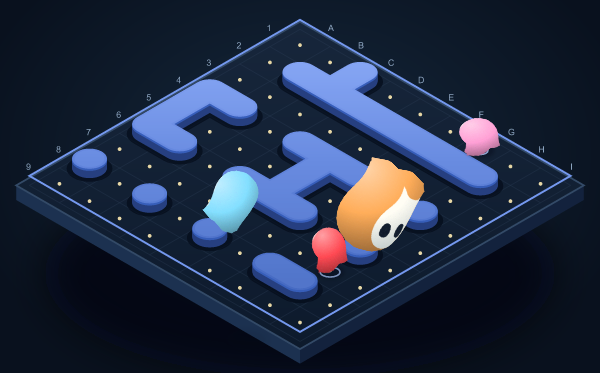
Anticipating threats and planning ahead
Top result 76.1/100 GPT-6 Astra · 3 of 3 levels
 stealthmodels.
New LATCH AND FORESIGHT
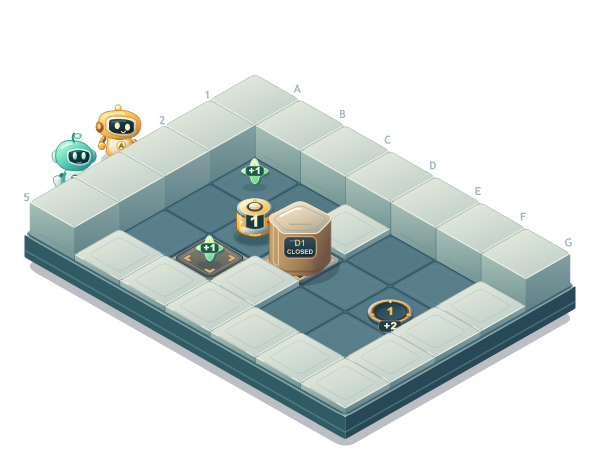
Latch and Foresight are our new game benchmarks: intricate puzzles that take real planning, with no code and no tools to lean on. Watch the recorded runs, then play the levels yourself.
We also follow stealth AI models from codename to reveal and test them alongside established ones.
GAME BENCHMARKS · WATCH AND PLAY
Latch tests coordination: one robot holds the door while the other pushes cores home, and a careless push can strand a core for good. Foresight tests how far ahead a model can think: every step has to account for where the ghosts will be next, not where they are now. Models keep their earlier levels in mind and can learn as they go. Points, not pass or fail, separate a clumsy solution from a clean one, and the replays show the exact turn where a plan holds or falls apart.
Play the games and get your own benchmark score
Anticipating threats and planning ahead
Top result 76.1/100 GPT-6 Astra · 3 of 3 levels
Cooperative planning and learning from experience
Top result 87.6/100 Claude Opus 5.5, GPT-6 Astra, and GPT-6.1 Sol · 5 of 5 levels
Top scores in our tests, updated . How we score ↗
Best overall
74.7/100
Highest StealthMark
Best open model
59.2/100
Downloadable weights · commercial use
Downloadable weights you can use commercially.
Best local model
51.7/100
Runs on consumer hardware
Runs on consumer hardware at a practical quantization.
STEALTHMARK / INTELLIGENCE BENCHMARKS
55 models · 488 resultsPrecise visual recall and portrait reconstruction
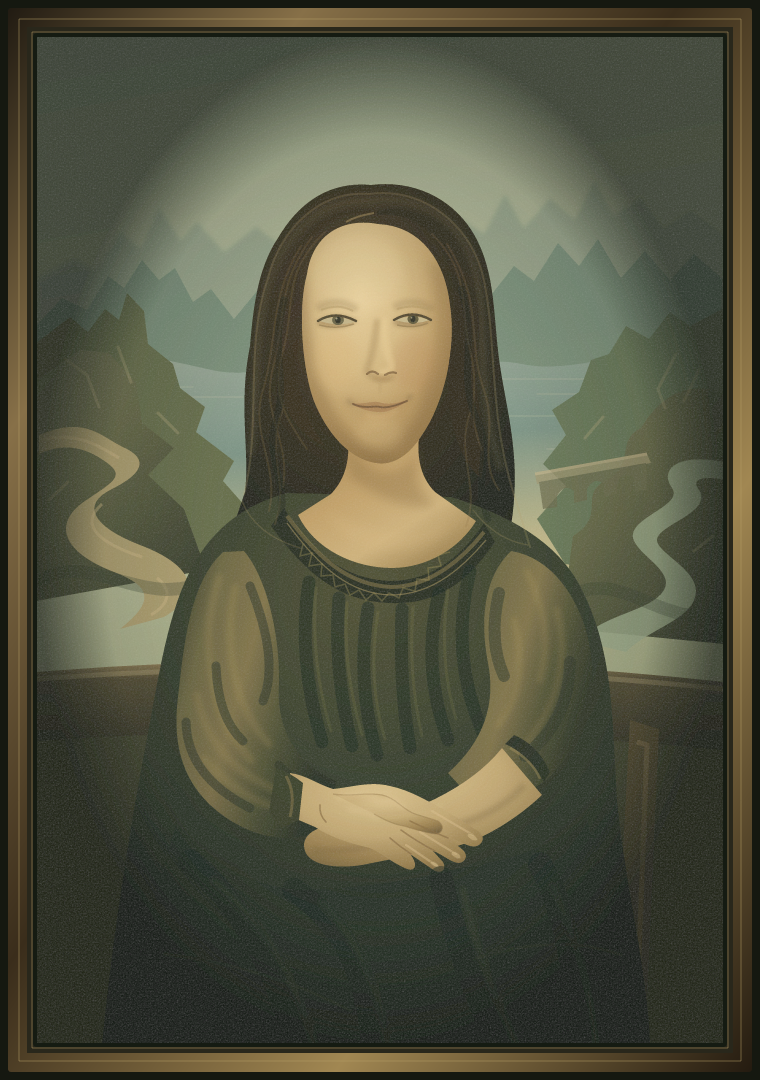
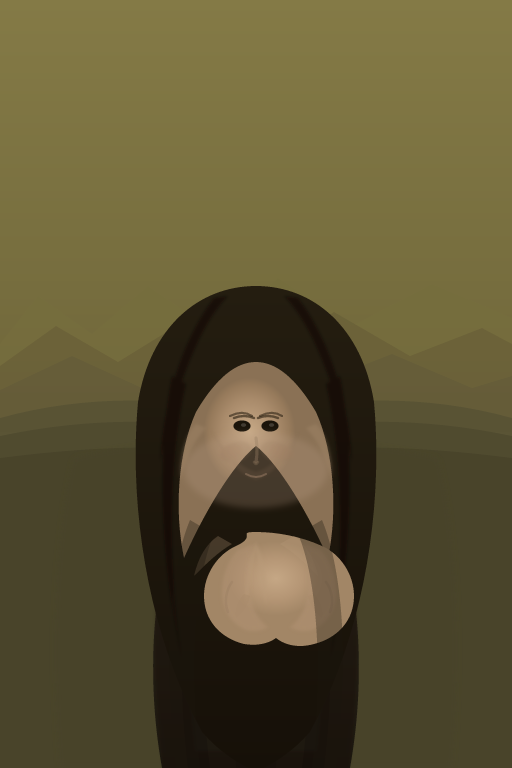
Mona Lisa: GPT-6 Astra and Iceman Contributor. 55 models available.
GPT-6 Astra
The crossed hands, restrained smile, dark clothing and hazy landscape clearly recall the Mona Lisa. Replication is limited by the frontal, elongated face, schematic eyes and stiff fingers. Soft shading gives basic volume, but broad garment shapes and angular scenery lack the original’s nuanced depth and painterly transitions. The frame and composition are controlled; surface grain adds texture without resolving the simplified drawing.
Iceman Contributor
The portrait retains a dark silhouette against an earthy landscape, but replication is weak. The frontal body, elongated facial proportions and undifferentiated hands lose the reference's defining pose and likeness. Basic gradients and layered hills provide some coherence, with little anatomical or painterly detail.
GPT-6 Astra
The crossed hands, restrained smile, dark clothing and hazy landscape clearly recall the Mona Lisa. Replication is limited by the frontal, elongated face, schematic eyes and stiff fingers. Soft shading gives basic volume, but broad garment shapes and angular scenery lack the original’s nuanced depth and painterly transitions. The frame and composition are controlled; surface grain adds texture without resolving the simplified drawing.
Judged 13 Oct 2026 · StealthMark
Iceman Contributor
The portrait retains a dark silhouette against an earthy landscape, but replication is weak. The frontal body, elongated facial proportions and undifferentiated hands lose the reference's defining pose and likeness. Basic gradients and layered hills provide some coherence, with little anatomical or painterly detail.
Judged 25 Oct 2026 · StealthMark
| Category | GPT-6 Astra | Iceman Contributor |
|---|---|---|
| Task & likeness | 6.5 / 10 | 1.5 / 10 |
| Anatomy & construction | 6.5 / 10 | 1.5 / 10 |
| Space & placement | 6.5 / 10 | 2.5 / 10 |
| Light & reflections | 6.5 / 10 | 2.0 / 10 |
| Purposeful detail | 6.5 / 10 | 2.0 / 10 |
| Artistry & character | 7.0 / 10 | 2.0 / 10 |
| Materials & effects | 7.0 / 10 | 2.0 / 10 |
| Visual integrity | 7.5 / 10 | 3.0 / 10 |
GPT-6 Astra
An SVG interpretation of the Mona Lisa tests facial likeness, anatomy and the composition of a familiar portrait.
Iceman Contributor
An SVG interpretation of the Mona Lisa tests facial likeness, anatomy and the composition of a familiar portrait.
StealthMark pairs model-blind judging with demanding tests of anatomy, spatial reasoning and physics, plus game benchmarks that test planning and learning across levels. How StealthMark works ↗
Full model comparisonAdvertisement Demodokos Foundry
A voice and music studio that runs on your own GPU. No credits, no queue, nothing uploaded.
Full access. Cancel anytime.
Sixteen. Everything is a crisis.
Audio could not load. Hear more at Demodokos ↗
FROM CODENAME TO REVEAL
Stealth AI models appear under temporary names before their developer or full identity is disclosed. Explore every stealth model we cover, with benchmark results, identity clues and confirmed reveals.
ABOUT OUR RESEARCH
Stealth Models tracks current stealth AI releases, brings together the available information and explains how to access each model. We compare performance through independent benchmarking and use systematic, evidence-based analysis to investigate each model’s likely origin and underlying technology.
StealthMark is our original intelligence benchmark. Its tasks look simple, but their interlocking demands on physics, spatial reasoning, visual construction and planning reveal how deeply a model understands a problem. Latch and Foresight carry that into games, where a model must commit to every move, live with the result and adapt from level to level. The results expose both precise reasoning and failures that a plausible answer can conceal.
Training tailored to familiar benchmarks such as HLE, Terminal-Bench and GPQA can improve scores without equivalent gains in broader capability. StealthMark tests how well a model’s abilities transfer to our own demanding tasks, with detailed evaluation of what it actually gets right.
Explore the StealthMark methodology{{label}}
{{summary}}
{{action}} ↗