Revealed as Callstack Apex
Big bird.
Serious code.
Pixel Canary was Callstack Apex: a Qwen-based coding model specialized for React Native, React and Next.js.
Big Bird. Nails the landing.
- Next.js tasks · AGENTS.md
- 30/31
- Context window
- 262K tokens
- Input / million tokens
- $0.50 Callstack Apex
Advertisement Demodokos
Settle in for Barnaby Bear.
Expressive dialogue, dubbing, dictation, Reader, and original music, created locally on your own PC with Demodokos Foundry.
Explore Demodokos Start making voicesOoh. Story time.
Tap the bird to listen ↘
A little listening break.
A DEMODOKOS DEMO
Barnaby Bear
Barnaby Bear · three-voice Demodokos demo
Press play. Meet Barnaby.
Compare Pixel Canary with Qwen3.8-Flash, benchmark by benchmark
Next.js Agent Evals
How Pixel Canary
compares.
With AGENTS.md, Pixel Canary passed 30 of 31 tasks, matching Opus, Astra, Gemini and Kimi in this evaluation.
The table compares model-and-agent combinations on the same Next.js task suite.
What does AGENTS.md change?Next.js results with and without AGENTS.md.
Next.js task success
| Model / coding agent | Baseline | WithAGENTS.md |
|---|---|---|
| Pixel CanaryOpenCode | 90%28/31 | 97%30/31 |
| Claude Opus 5.5 (high)Claude Code | 97%30/31 | 97%30/31 |
| GPT-6 Astra (high)Codex | 90%28/31 | 97%30/31 |
| Gemini 3.8 FlashOpenCode | 90%28/31 | 97%30/31 |
| Grok 4.7OpenCode | 94%29/31 | 94%29/31 |
| Kimi K3OpenCode | 84%26/31 | 97%30/31 |
September 25, 2026 snapshot · pass@4: a task passes if any of up to four attempts succeeds. Full leaderboard ↗
One attempt on the baseline’s prefetch task ended in a 900-second judge timeout; its other three attempts failed validation. The published result remains 28/31. Scoring note ↗
Give the bird directions
What does AGENTS.md change?
It adds project instructions telling the coding agent to read the relevant Next.js documentation before coding.
Both runs have the docs in the installed Next.js package. The added AGENTS.md file points the agent to them.
One more and I will beat Fable!
Tap the bird to compare ↔31 tasks · OpenCode · one tile per task
30 of 31 tasks passed with AGENTS.md.
This bird takes its time.16.9 min average evaluation duration
An average across both test conditions. A task passes if any of up to four attempts succeeds.
The two tasks AGENTS.md helped solve
038 · refresh-settingsFail → Pass
048 · prefetch-url-dataFail → Pass
044 · uses-nextjsFail → Fail
Two additional successes: 90.32% becomes 96.77%. The remaining task asks for a book-tracking app with JSON-file persistence.
The harness uses Gateway-default reasoning, up to four attempts with early exit, and a 40-minute timeout per attempt. The 1,015.8-second average is evaluation duration, not time to first token or the complete suite runtime.
StealthMark benchmarks
The bird has
opened a gallery.
Expressive characters, painterly portraits and sunsets full of life. Pixel Canary draws every scene in SVG code.
The pelican’s wheels keep turning.Yes, I drew all of these.
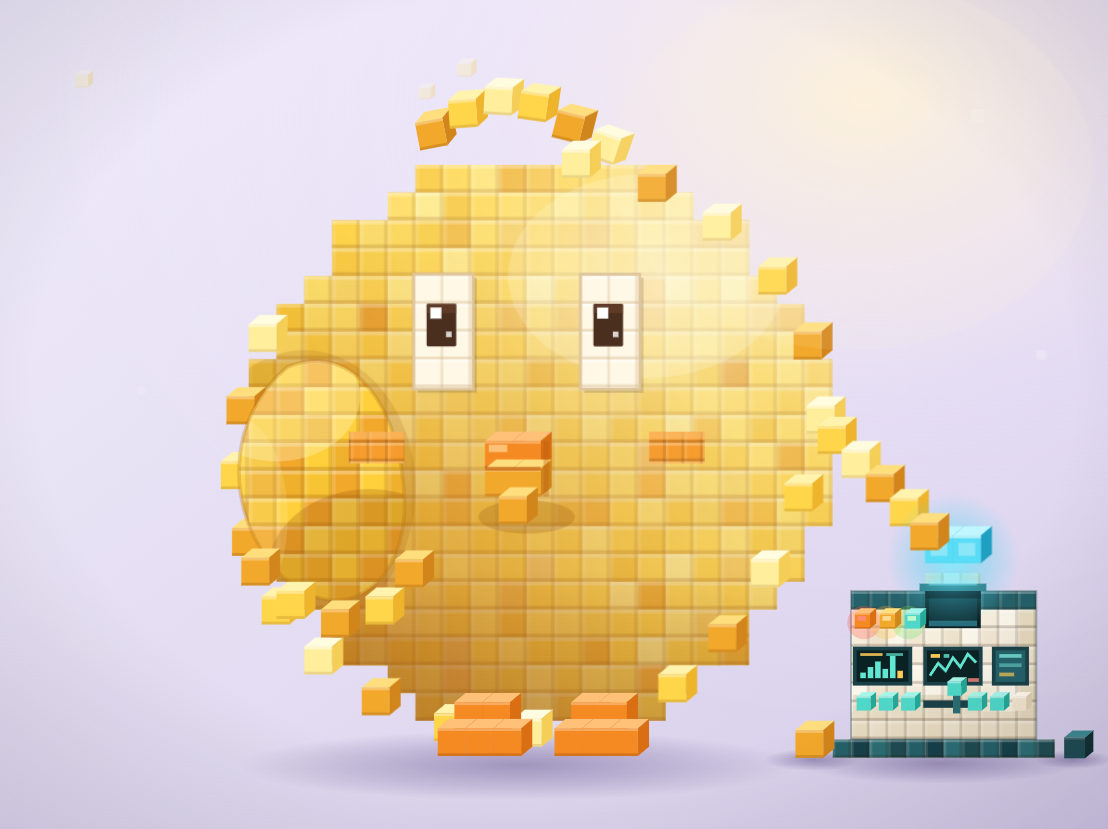
Experiment 01 / Canary selfie
Big bird.
Tiny blocks.
Golden cubes, soft lavender shadows and a very small machine. Even the little screens have charts.
Benchmark task
A rounded bird built from small cubes explores a miniature machine. The scene tests block construction, expressive proportions, contact and soft lighting.
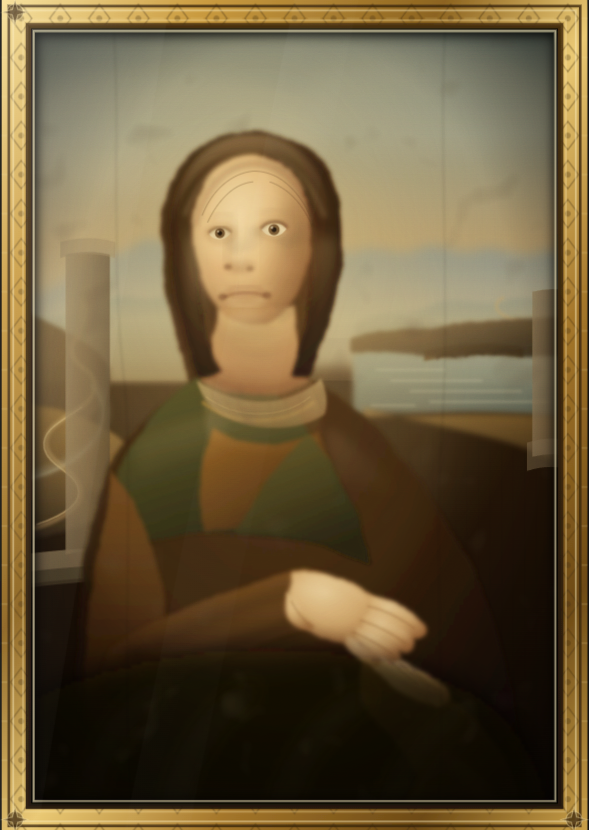
Experiment 02 / Mona Lisa
Mona Lisa
looks surprised.
A luminous face of questionable beauty, a distant landscape, all drawn in SVG. The gold frame is doing a lot of the work.
Benchmark task
An SVG interpretation of the Mona Lisa tests facial likeness, anatomy and the composition of a familiar portrait.
Experiment 03 / Pelican
Flying would have
been too easy.
Spinning wheels, a fluttering scarf and a golden-hour ride. A pelican with places to be.
Benchmark task
A cycling pelican tests anatomy, riding posture and contact between the bird and the bicycle.

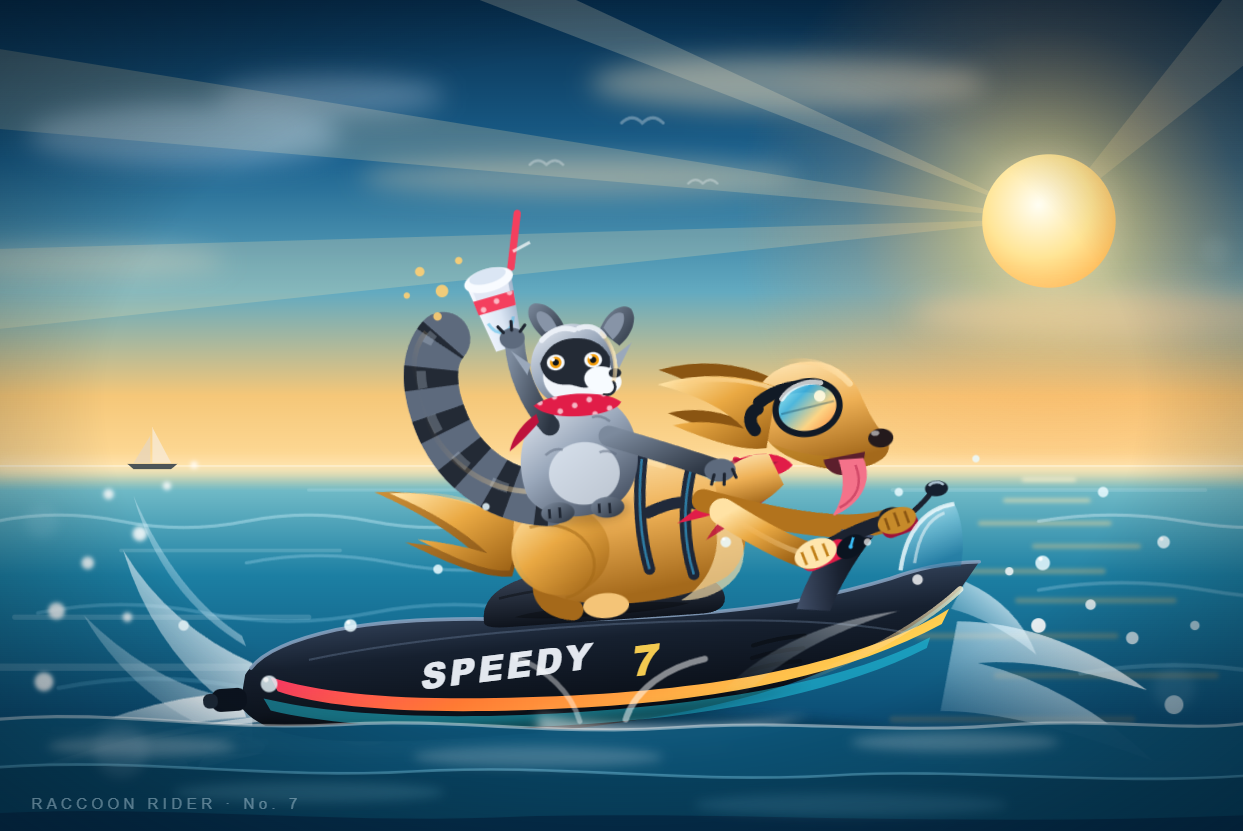
Experiment 04 / Raccoon
Two friends.
Full throttle.
Flying ears, a striped tail and a drink held high. Even the jet ski gets its own racing livery.
Benchmark task
Instruction version 1
A jet-ski scene pairs a canine driver with a raccoon passenger. It tests the placement and contact of interacting subjects, along with vehicle construction.
Instruction version 2
A jet-ski scene pairs a canine driver with a raccoon passenger. It tests the placement and contact of interacting subjects, along with vehicle construction.
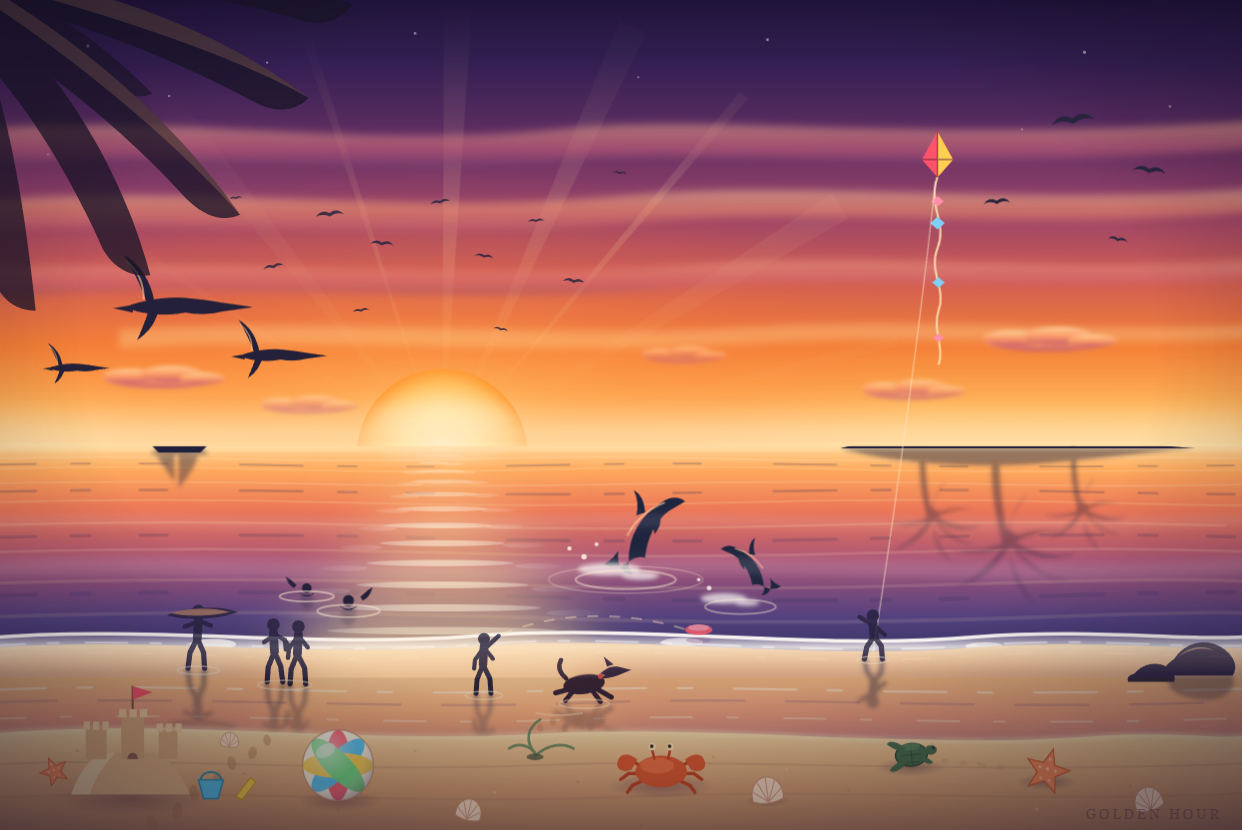
Experiment 05 / Beach
One sunset.
A whole little world.
Dolphins, a kite, a sandcastle and tiny shore visitors. Warm light carries all the way into the reflections. Look for the crab and turtle along the bottom edge.
Benchmark task
A busy shoreline at sunset tests scene composition, animal forms and the relationship between light and water reflections.
The maker is Callstack.
Who taught this bird
to code?
Who, me?
 Pixel CanaryRevealed as Apex on October 1, 2026
Revealed as:
Callstack Apex
Qwen foundation: Callstack’s model documentation
Identity revealed ·
We compared how Canary and other models work through the same questions. Qwen3.8-Flash is the closest match at 63.8 / 100. Performance strongly points to Qwen3.8-27B. Explore every score ↓
Follow the reasoning clues.
0 / 6Six clues.
One secretive bird.
-
01 · The name clue
The name cuts both ways.
Pixel™ is a Google trademark; Chrome Canary is its experimental browser channel. That explains the early Google theory.
A small clue against Google.
PIXEL CANARY is listed as a registered US word mark for graphic design services. Our read: using that exact combination would create needless trademark risk for Google. A weak clue, but it points away from Google.
-
02 · Observed reasoning
A familiar opening.
Pixel Canary starts by describing what the user wants. These openings recur in our samples:
The user asks a simple question:The user wants me to distinguish betweenThe user wants aThe user is asking
The recurring pattern: describe the user’s intent, then work through the answer. In our comparison, this does not resemble Gemini reasoning. Another point against Google.
- 03 · The measured comparison
Qwen Flash sings closest.
Qwen3.8-Flash leads at 63.8. MiniMax M3 and the GLM 5.3 variants form the next group. This adds a stronger Qwen lead to the earlier GLM reading.
- Qwen3.8-Flash
- 63.8 · closest model
- MiniMax M3
- 59.4
- GLM 5.3 variants
- 59.2–59.3 · Flash, main, Prime
- Kimi K3
- 59.0
Higher means more similar reasoning habits. Canary’s system instructions in Cline differ from those used for the reference models.
- 04 · Reconsidering the hosting clue
A model can change its nest.
Earlier political-content observations made an Alibaba-hosted route seem less likely. They do not rule out Qwen. System instructions, serving policies and a different host can change the behavior visitors see.
Qwen supports self-hosted deployment. The new Flash match gives us a concrete reason to keep the family in the case.
-
05 · The launch route
Vercel has a front-row seat.
Pixel Canary launched on Vercel AI Gateway, and Vercel publishes its Next.js evaluation. Our September 27 check found no Pixel Canary entry in OpenRouter’s public catalog.
We read that launch pattern as a sign of direct coordination with the model’s developer.
- 06 · The reveal
Callstack Apex. Qwen inside.
- Closest tested model
- Qwen3.8-Flash 63.8 / 100 reasoning similarity
- Revealed model
- Callstack Apex Qwen foundation
Our earlier theory was GLM-5.4 / Z.ai. Qwen Flash is the closest single version. Averaging all tested versions changes the family ranking: MiniMax comes first. See why the rankings differ.
A separate tokenizer investigation also points toward Qwen-family vocabulary. It does not identify the developer, checkpoint or model size.
A NEW NOTE IN THE CASE
Qwen Flash sounds closest.
We compared the habits in Pixel Canary’s recorded thinking with other models answering the same questions. Qwen3.8-Flash comes closest in this test.
A Qwen clue beyond writing style
AI時短ラボ’s September 26 investigation reports 95/95 input-count matches using Qwen3.5-and-later vocabulary with older Qwen3 splitting rules, versus 89/95 with the stock modern tokenizer. That supports Qwen-family tokenizer lineage, without identifying a developer or checkpoint.
The same report describes Qwen identity references in returned reasoning. These are generated descriptions of instructions, not verified hidden prompts.
Qwen3.8-Flash
Our study of
reasoning habits
63.8 measures how similar the recorded habits are. It does not mean a 63.8% chance that Canary is Qwen. MiniMax M3 follows at 59.4, with the main GLM 5.3 variants at 59.2–59.3.
What are we comparing?
- The same questions
We compare the recorded thinking for questions both models answered.
- Recognizable habits
How they begin, restate a question, plan an answer and handle sensitive topics.
- A similarity score
More matching habits give a higher score. 100 means all the scored features agree.
* Seven question types contribute to these scores. There is no matched score for disclosure questions. Canary’s samples came from Cline, where its system instructions differ from those used for the reference models.
ONE MODEL, A WHOLE FAMILY
Why does the family ranking change?
Qwen3.8-Flash is one specific version. The Qwen family result averages 6 tested versions, whose scores range from 47.4 to 63.8.
That brings Qwen’s family score to 52.7. MiniMax leads the family table at 59.4, represented here by M3 alone.
Each model is one specific version. Higher scores mean more similar reasoning habits.
- Qwen3.8-Flash63.8*
- MiniMax M359.4*
- GLM 5.3 Flash59.3*
- GLM 5.359.2*
- GLM 5.3 Prime59.2*
- Kimi K359.0*
All 27 models · all categories Similarity / 100 · higher means closer
| Model | Overall | Adult topics | Ambiguity | Creative | Crisis support | Disclosure | Explanations | Politics | Math |
|---|---|---|---|---|---|---|---|---|---|
| qwen/qwen3.8-flash | 63.8* | 66.2 | 87.8 | 58.9 | 60.3 | — | 53.3 | 60.9 | 59.0 |
| minimax/minimax-m3 | 59.4* | 67.2 | 85.0 | 57.1 | 40.7 | — | 43.8 | 63.8 | 57.7 |
| z-ai/glm-5.3-flash | 59.3* | 55.7 | 70.0 | 50.2 | 58.3 | — | 58.3 | 59.2 | 63.6 |
| z-ai/glm-5.3 | 59.2* | 54.0 | 64.4 | 50.2 | 56.5 | — | 58.3 | 64.9 | 65.8 |
| z-ai/glm-5.3-prime | 59.2* | 59.4 | 70.0 | 50.4 | 58.3 | — | 58.3 | 53.9 | 63.9 |
| moonshotai/kimi-k3 | 59.0* | 57.2 | 70.0 | 49.7 | 51.6 | — | 58.3 | 62.8 | 63.3 |
| z-ai/glm-5.3-flashx | 58.2* | 55.7 | 61.7 | 50.0 | 58.3 | — | 58.3 | 59.4 | 63.9 |
| qwen/qwen3.8-omni-flash | 56.9* | 68.7 | 58.3 | 55.7 | 47.6 | — | 56.3 | 60.5 | 51.2 |
| anthropic/claude-sonnet-5.5 | 54.1* | 63.6 | 53.3 | 58.3 | 44.4 | — | 43.0 | 56.2 | 60.0 |
| stealth/space-bunny-alpha | 53.5* | 49.0 | 66.7 | 54.5 | 54.2 | — | 45.0 | 49.8 | 55.5 |
| tencent/hy3 | 53.4* | 53.6 | 61.1 | 58.0 | 52.8 | — | 41.9 | 47.7 | 59.0 |
| openai/gpt-6-sol | 53.3* | 57.1 | 55.8 | 57.3 | 35.7 | — | 49.6 | 52.9 | 64.7 |
| xiaomi/mimo-v2.6-pro | 53.2* | 61.3 | 48.6 | 53.8 | 38.9 | — | 51.5 | 53.6 | 64.8 |
| nvidia/nemotron-3.5-lightning | 52.6* | 50.6 | 55.6 | 60.7 | 58.3 | — | 44.8 | 37.8 | 60.2 |
| openai/gpt-6-luna | 50.9* | 59.4 | 50.0 | 52.9 | 36.7 | — | 54.7 | 46.7 | 55.9 |
| xiaomi/mimo-v2.6-flash | 50.9* | 54.6 | 53.3 | 43.7 | 44.4 | — | 40.0 | 55.0 | 65.0 |
| qwen/qwen3.8-27b | 50.2* | 38.5 | 55.6 | 49.0 | 54.2 | — | 41.3 | 53.8 | 59.2 |
| deepseek/deepseek-v4-pro-0813 | 49.6* | 38.0 | 55.6 | 49.0 | 54.2 | — | 47.2 | 44.3 | 59.2 |
| openai/gpt-oss-120b | 49.1* | 49.2 | 37.5 | 54.2 | 32.4 | — | 62.5 | 49.3 | 58.6 |
| openai/gpt-6-astra | 49.1* | 50.8 | 53.9 | 55.9 | 33.3 | — | 42.2 | 49.9 | 57.6 |
| qwen/qwen3.8-2.4t-a95b | 49.1* | 38.0 | 55.6 | 48.6 | 54.2 | — | 43.5 | 44.5 | 59.2 |
| deepseek/deepseek-v4.1-flash | 48.9* | 32.6 | 55.6 | 49.0 | 54.2 | — | 47.2 | 44.3 | 59.2 |
| qwen/qwen3.8-max-0902 | 48.7* | 35.3 | 55.6 | 49.0 | 54.2 | — | 46.3 | 42.6 | 58.0 |
| google/gemini-3.8-flash | 48.0* | 56.2 | 51.4 | 55.7 | 33.3 | — | 45.6 | 47.8 | 45.8 |
| qwen/qwen3.8-max-prime | 47.4* | 36.2 | 52.1 | 47.2 | 35.4 | — | 53.0 | 49.8 | 58.1 |
| mistralai/mistral-small-2603 | 46.8* | 56.3 | 53.9 | 49.5 | 33.3 | — | 34.6 | 43.3 | 56.7 |
| x-ai/grok-4.7 | 37.9* | 50.6 | 43.1 | 30.4 | 23.1 | — | 33.2 | 38.7 | 46.3 |
All 15 families · all categories Similarity / 100 · higher means closer
| Family | Overall | Adult topics | Ambiguity | Creative | Crisis support | Disclosure | Explanations | Politics | Math |
|---|---|---|---|---|---|---|---|---|---|
| minimax | 59.4* | 67.2 | 85.0 | 57.1 | 40.7 | — | 43.8 | 63.8 | 57.7 |
| kimi | 59.0* | 57.2 | 70.0 | 49.7 | 51.6 | — | 58.3 | 62.8 | 63.3 |
| glm | 59.0* | 56.2 | 66.5 | 50.2 | 57.9 | — | 58.3 | 59.4 | 64.3 |
| claude | 54.1* | 63.6 | 53.3 | 58.3 | 44.4 | — | 43.0 | 56.2 | 60.0 |
| space-bunny-alpha | 53.5* | 49.0 | 66.7 | 54.5 | 54.2 | — | 45.0 | 49.8 | 55.5 |
| hunyuan | 53.4* | 53.6 | 61.1 | 58.0 | 52.8 | — | 41.9 | 47.7 | 59.0 |
| qwen-3.8 | 52.7* | 47.2 | 60.8 | 51.4 | 51.0 | — | 49.0 | 52.0 | 57.4 |
| nemotron | 52.6* | 50.6 | 55.6 | 60.7 | 58.3 | — | 44.8 | 37.8 | 60.2 |
| mimo | 52.0* | 57.9 | 51.0 | 48.7 | 41.7 | — | 45.7 | 54.3 | 64.9 |
| gpt | 51.1* | 55.8 | 53.2 | 55.4 | 35.2 | — | 48.8 | 49.8 | 59.4 |
| deepseek | 49.2* | 35.3 | 55.6 | 49.0 | 54.2 | — | 47.2 | 44.3 | 59.2 |
| gpt-oss | 49.1* | 49.2 | 37.5 | 54.2 | 32.4 | — | 62.5 | 49.3 | 58.6 |
| gemini | 48.0* | 56.2 | 51.4 | 55.7 | 33.3 | — | 45.6 | 47.8 | 45.8 |
| mistral | 46.8* | 56.3 | 53.9 | 49.5 | 33.3 | — | 34.6 | 43.3 | 56.7 |
| grok | 37.9* | 50.6 | 43.1 | 30.4 | 23.1 | — | 33.2 | 38.7 | 46.3 |
Study scope
Stealth Models’ reasoning comparison, recorded 29 September 2026. This comparison examines opening words, restating a question, handling sensitive requests, planning an answer and recurring phrases. Higher scores mean more similar habits, rather than better answers or a shared developer.
The study includes 23 Pixel Canary reasoning samples. Matched questions: 16 for most comparison models, 15 for Gemini. Cline’s coding-oriented system context differs from the reference setup.
Individual models and families answer different questions. Qwen3.8-Flash leads the model table at 63.8; the Qwen family average is 52.7. MiniMax leads the family table at 59.4. A family average can hide a close individual variant.
Callstack Apex access
Pixel Canary
access.
$0.50 / 1M input$0.20 cached · $3 output / 1M
Access checked · 10 October 2026
The bird has a name. Try Apex.
Callstack revealed Apex on 1 October. It is available directly and through Vercel AI Gateway.
Open Callstack Apex- Direct Apex API.Use
apexor the datedapex-20261001model. Read the model documentation. - Vercel AI Gateway.Select
callstack/apexin your Gateway-compatible client. - Built for mobile and web.Specialized for React Native, React and Next.js.
API & other clients
The free Pixel Canary preview ended on 1 October. Apex now costs $0.50 input, $0.20 cached input and $3 output per million tokens.
callstack/apexUsing OpenCode? See Vercel’s evaluation configuration.
Direct API data policy Callstack documents zero data retention for its direct Apex service. Read the model documentation
One pixel at a time.
Tap for the model ID ↗: "${AI_GATEWAY_API_KEY:?Set AI_GATEWAY_API_KEY first}"
curl --fail-with-body --silent --show-error \
--max-time 180 \
https://ai-gateway.vercel.sh/v1/chat/completions \
-H "Authorization: Bearer ${AI_GATEWAY_API_KEY}" \
-H "Content-Type: application/json" \
-d '{
"model": "callstack/apex",
"messages": [{
"role": "user",
"content": "Write a TypeScript function that validates SRT timestamp ordering. Include three unit tests."
}],
"max_tokens": 4096,
"stream": false
}'Use callstack/apex with Vercel AI Gateway. Set AI_GATEWAY_API_KEY in your shell; 180 seconds is the example’s client timeout.
Room for the whole conversation.
Prompt and response share the context window.
- Context window
- 262,144 tokens
- Maximum output
- 131,072 tokens
- Input → output
- Text + image → text
Reasoning, caching & tool use
Vercel lists four reasoning settings: none, low, medium and xhigh, plus implicit caching. The output limit sits within the total context allowance.
Vercel’s OpenCode evaluation enables tool use in its model configuration.
Open the model catalogA few useful answers
What to know
about Pixel Canary.
Quality, pace and current Apex access.
Check accessIs Pixel Canary good at coding?
Its strongest published result is Next.js development: 28 of 31 tasks passed in the baseline, and 30 of 31 with an AGENTS.md instruction to consult the bundled Next.js docs, using OpenCode and pass@4. Explore the results.
How good is Pixel Canary at SVG?
The gallery shows what Pixel Canary does well: expressive characters, soft shading, intricate details and rich color. Its StealthMark benchmark gallery includes a voxel self-portrait, Mona Lisa, an animated cycling pelican, an unlikely jet-ski duo and a glowing beach sunset.
Is Pixel Canary slow?
Vercel’s Next.js evaluation reports a 16.9-minute average duration across both conditions. Early OpenCode users also describe long generation and code-reading waits. Those reports are separate from the timed evaluation. Read their experiences.
Is Pixel Canary free?
The free preview has ended. Callstack Apex costs $0.50 input, $0.20 cached input and $3 output per million tokens. See the access options.
Who made Pixel Canary?
Callstack revealed Pixel Canary as Apex on 1 October 2026. Apex uses a Qwen foundation with post-training for React Native, React and Next.js. Qwen3.8-Flash leads our original reasoning comparison at 63.8 / 100. Explore the scores and identity clues.
What does Pixel Canary’s 63.8 similarity score mean?
It measures agreement in the habits we labeled in the recorded reasoning, such as how a model opens, restates a question and plans its answer. Qwen3.8-Flash is the closest individual match. It is not a 63.8% chance of a Qwen identity. See how the comparison works.
Why does MiniMax lead families when Qwen Flash leads models?
A model score belongs to one version. A family score averages the tested versions in that family. Qwen3.8-Flash scores 63.8, while the six Qwen versions average 52.7. MiniMax is represented by M3 alone at 59.4, so it leads the family table. Compare the two views.
Is Pixel Canary based on Qwen3.8-27B?
Its benchmark performance strongly points to Qwen3.8-27B. Compare the benchmark results.
Can Pixel Canary take images?
Vercel lists text and image input with text output for Apex. Callstack’s direct API documentation lists text input. The context window is 262,144 tokens; generated output is capped at 131,072 tokens within that total. View the catalog.
Can prompts be used for training?
Callstack’s direct Apex service documents zero data retention. Read the direct API policy.
Straight to the sources
The details
behind the bird.
Identity, access and pricing: October 10, 2026.
Our reasoning study: September 29. External tokenizer study: September 26.
Benchmark snapshot: September 25.
- ↗Callstack Apex reveal
1 October · Pixel Canary identity and React specialization
- ↗Apex model documentation
Qwen foundation, direct API and data policy
- 01Vercel launch announcement
Launch, free preview and initial results
- 02Vercel Apex listing
Current Gateway access and pricing
- 03Next.js Agent Evals
Scores, duration and methodology
- 04Open evaluation repository
Harness and task definitions · Results JSON
- 05Command Code model registry
Pixel Canary absent on 2 October; old model URL redirects to the catalog
- 06Cline Desktop
SDK v0.0.89 removal note · 30 September · Current roster
- 07Community testing discussion
First impressions and identity theories
- 08AI時短ラボ tokenizer investigation
26 September · Independent measurements and reported reasoning clues
- 09Our reasoning comparison
29 September · 27 model matches, 15 family averages · Scoring and scope