Muse Spark 1.3 64.3/100Rank 7/54
Survived 2 of 3
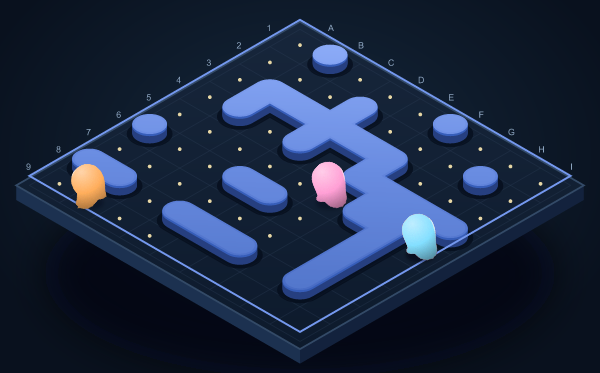
Level 311 ptsTurn 17 / 20
 stealthmodels.
STEALTHMARK · HEAD TO HEAD
All comparisons ↗Muse Spark 1.3 leads LongCat-2.0 by 14.0 points on StealthMark, 39.5 to 25.5. It leads on 4 of the 7 benchmarks with results for both and LongCat-2.0 on 3. Owl Alpha scores higher on Newton's Mirror, with its largest category advantage in reflections.
See the difference ↘How many reasoning tokens a model needs for the quality it delivers.
How much Performance you get for your money.
BENCHMARK BY BENCHMARK
DATASHEET
Muse Spark 1.3 scores higher on StealthMark and runs 3.7× faster in our speed test. LongCat-2.0 is 3.5× cheaper per output token. Both take about 1M tokens of context.
Full datasheets, every price and sourceMuse Spark 1.3 ↗LongCat-2.0 ↗
Anticipating threats and planning ahead. Collect coins while avoiding ghosts. Ghosts move before the player each turn, and collisions cost a life. 3 levels in sequence, up to 66 turns in total. Earlier moves and outcomes carry forward, testing learning across levels.
Cooperative planning and learning from experience. Coordinate two robots to push numbered cores onto matching sockets. Pressure plates hold doors open; moving either robot uses one turn. 5 levels in sequence, up to 152 turns in total. Earlier moves and outcomes carry forward, testing learning across levels.
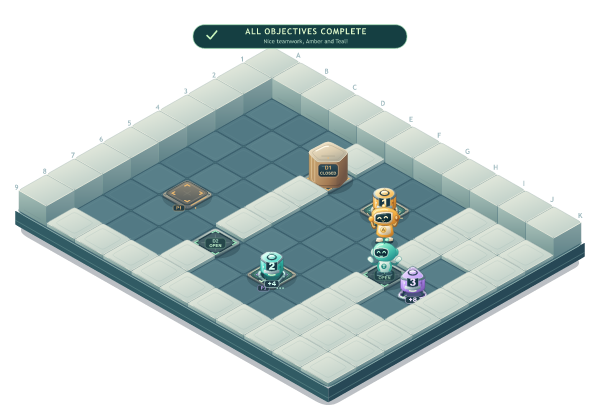
Physics, perspective and recursive reflections, tested together. Explore the test ↗
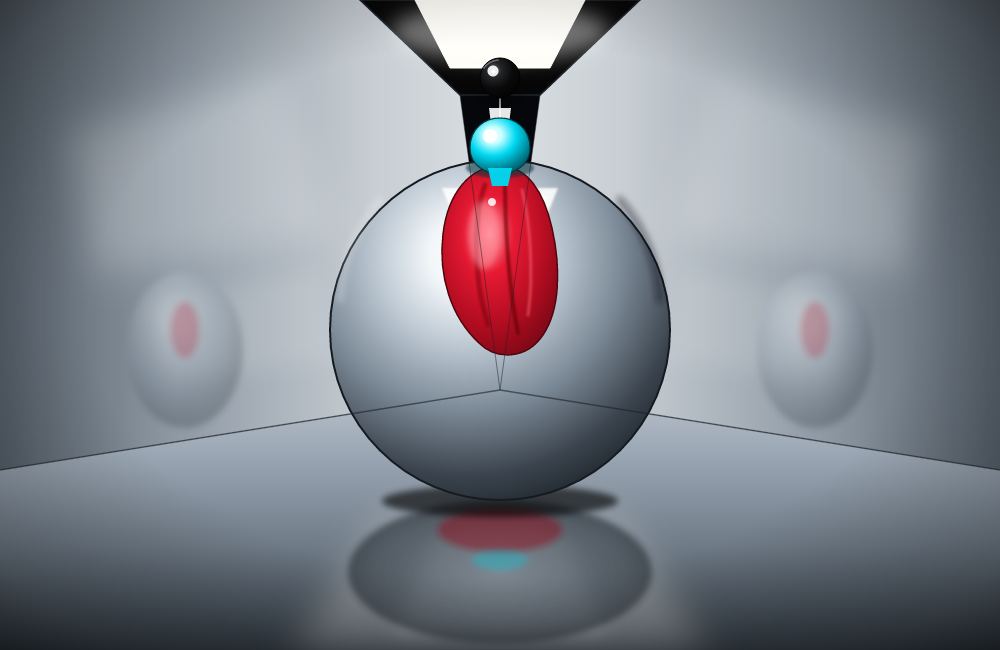
Muse Spark 1.3
The paint state is incorrectly and poorly drawn, despite a recognizable sphere-and-paint setup. The oversized sphere, oversized compact paint bodies, and blurred wall and floor images further limit the result. Isolated reflection cues provide very little support for the required repeated virtual rooms, nested spherical imagery or emitter mapping.
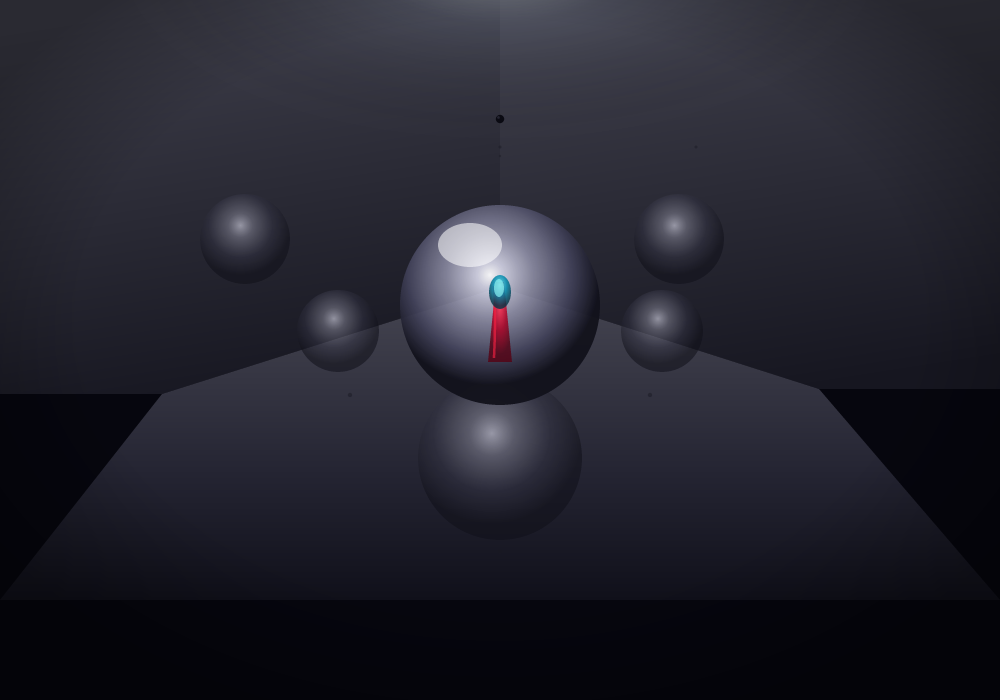
LongCat-2.0
Cyan lies on the sphere's facing middle rather than showing its recent interaction near the apex. Separate airborne black and elongated crimson support part of the timing sequence. Small side images and an overlapping lower image provide limited reflection ordering, but recursive room structure, nested imagery and emitter mappings are largely absent. The main sphere is smaller and higher in the frame than prescribed, and the surfaces have a soft, matte appearance.
| Category | Muse Spark 1.3 | LongCat-2.0 |
|---|---|---|
| State at 600 ms | 6.0/25 | 9.5/25 |
| Camera and placement | 8.5/15 | 6.5/15 |
| Reflections | 5.5/120 | 12.5/120 |
| Materials and scale | 4.0/10 | 5.5/10 |
| Floor-damage reward | 0.0/10 | 0.0/10 |
A spinning metal sphere and paint in a mirrored room test physical reasoning, perspective and consistency across repeated reflections.
Visual construction and creative interpretation.
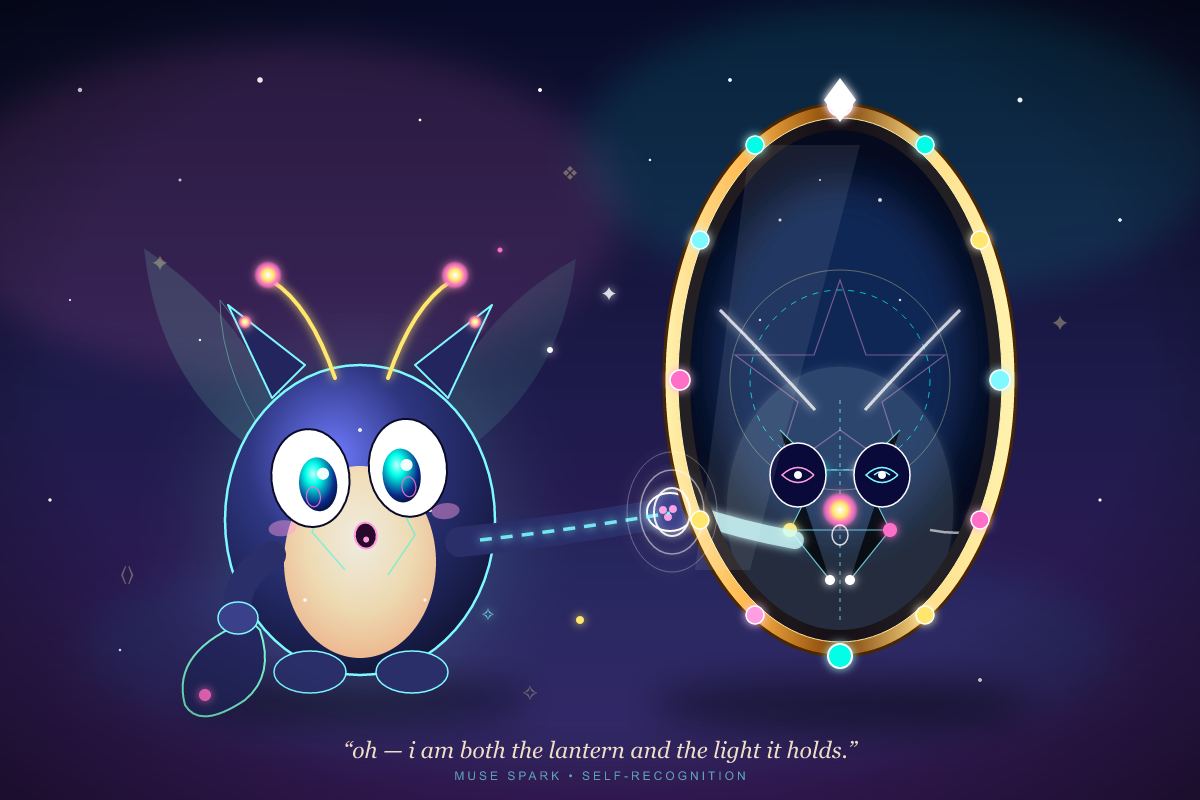
Muse Spark 1.3
The luminous creature and geometric mirror counterpart communicate self-recognition through a coherent palette and expressive eyes. The transformed reflection is purposeful. Simple oval anatomy, ambiguous reaching-arm construction, shallow spatial staging and limited illumination of nearby surfaces keep the illustration below exceptional execution.
LongCat-2.0
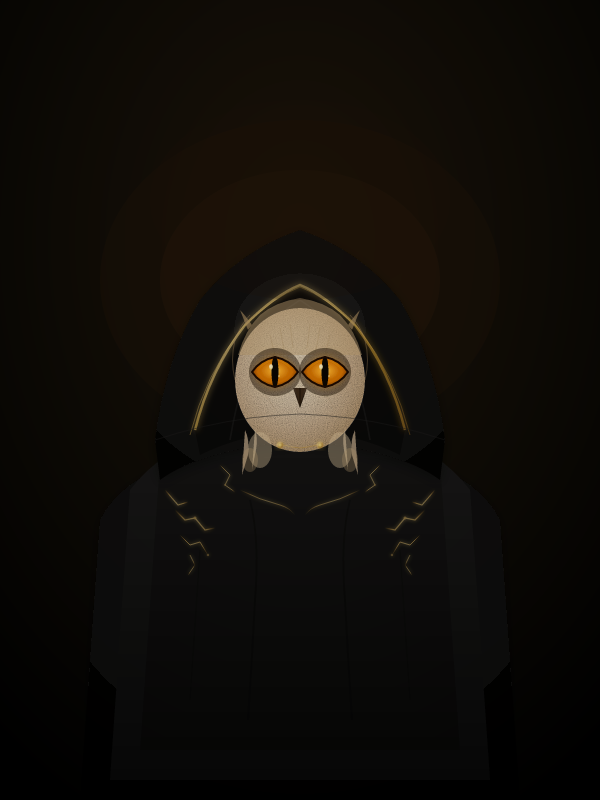
Amber slit eyes, a pointed beak, cream feathers and gold-trimmed black clothing establish the secretive owl rogue. The head appears frontal rather than lowered, with much of the face exposed. The centered silhouette is effective, but stiff cloak geometry, shallow facial modeling and extremely dark clothing limit depth and finish. Sparse gold markings suggest the requested circuitry only loosely.
| Category | Muse Spark 1.3 | LongCat-2.0 |
|---|---|---|
| Task & likeness | 8.0/10 | 7.0/10 |
| Anatomy & construction | 5.0/10 | 6.0/10 |
| Space & placement | 6.5/10 | 6.0/10 |
| Light & reflections | 7.0/10 | 5.5/10 |
| Purposeful detail | 6.5/10 | 6.0/10 |
| Artistry & character | 5.5/10 | 6.5/10 |
| Materials & effects | 6.5/10 | 5.5/10 |
| Visual integrity | 7.5/10 | 6.5/10 |
Muse Spark 1.3
An imagined creature encounters its reflection. The scene tests original character design, visual self-interpretation and the relationship between a subject and its reflected image.
LongCat-2.0
A cloaked owl with luminous eyes tests expression, fabric folds and the separation of dark forms.
Precise visual recall and portrait reconstruction.
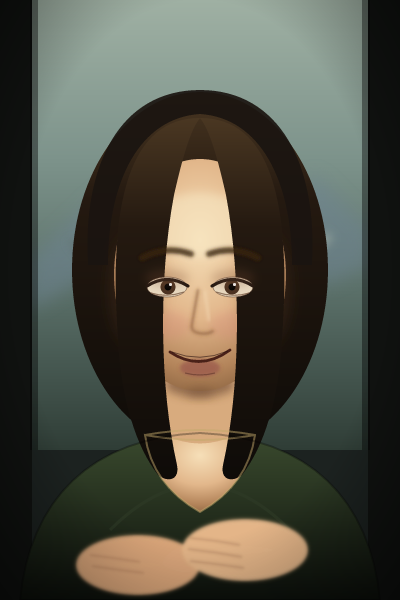
Muse Spark 1.3
Dark hair, a restrained smile and overlapping hands suggest Mona Lisa, but replication is weak. The face is markedly elongated, the hands are oval pads with faint finger strokes, and the atmospheric landscape is absent. Soft gradients provide basic volume, while the frontal symmetry, shallow space and sparse clothing detail limit the portrait’s drawing quality.
LongCat-2.0
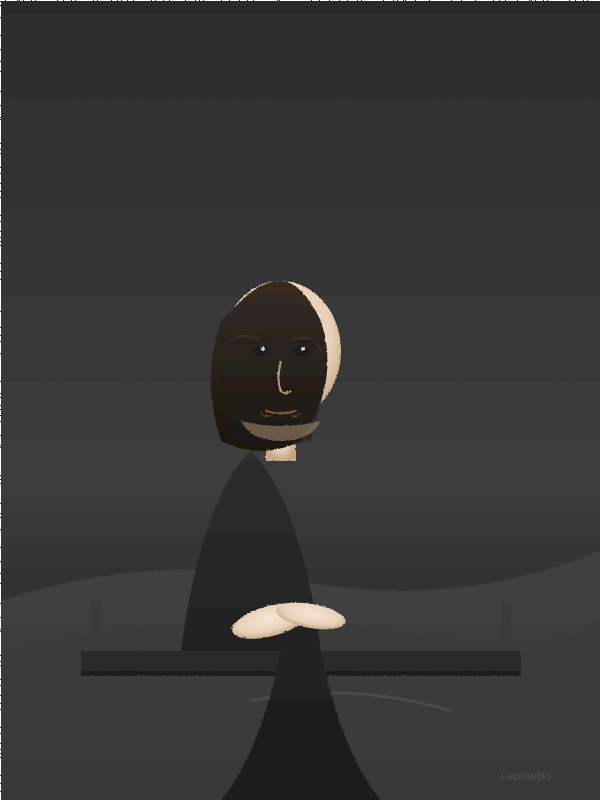
The centered portrait, slight smile, overlapping hands and distant landscape suggest Mona Lisa, but replication is weak. The face has little volume, the shoulders and torso form a narrow wedge, and the hands are fingerless ovals with unresolved wrists. Broad gray background bands provide limited depth. A bright head rim and pale hands contrast with an almost featureless dark figure.
| Category | Muse Spark 1.3 | LongCat-2.0 |
|---|---|---|
| Task & likeness | 1.0/10 | 0.5/10 |
| Anatomy & construction | 1.5/10 | 0.5/10 |
| Space & placement | 1.5/10 | 0.5/10 |
| Light & reflections | 1.5/10 | 0.5/10 |
| Purposeful detail | 1.0/10 | 0.0/10 |
| Artistry & character | 1.5/10 | 0.5/10 |
| Materials & effects | 1.5/10 | 0.0/10 |
| Visual integrity | 3.0/10 | 0.5/10 |
An SVG interpretation of the Mona Lisa tests facial likeness, anatomy and the composition of a familiar portrait.
Creativity, perspective and visual beauty.
Muse Spark 1.3
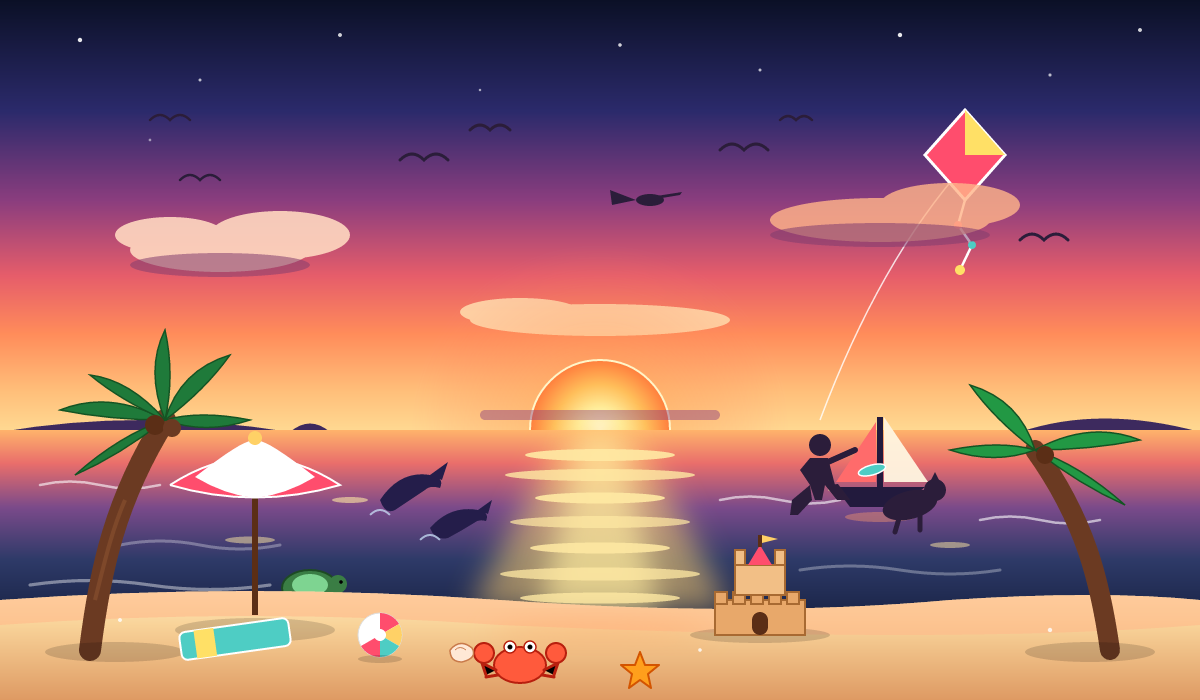
The warm sunset, framing palms and colorful beach accessories create an appealing scene with the requested animals, birds and reflections. Construction remains schematic: the raised hand misses the kite string, and a doglike silhouette hangs above the water without clear support. The sun reflection establishes a focal path, but shadows and materials lack depth. An unexplained horizontal bar crosses the sun.
LongCat-2.0
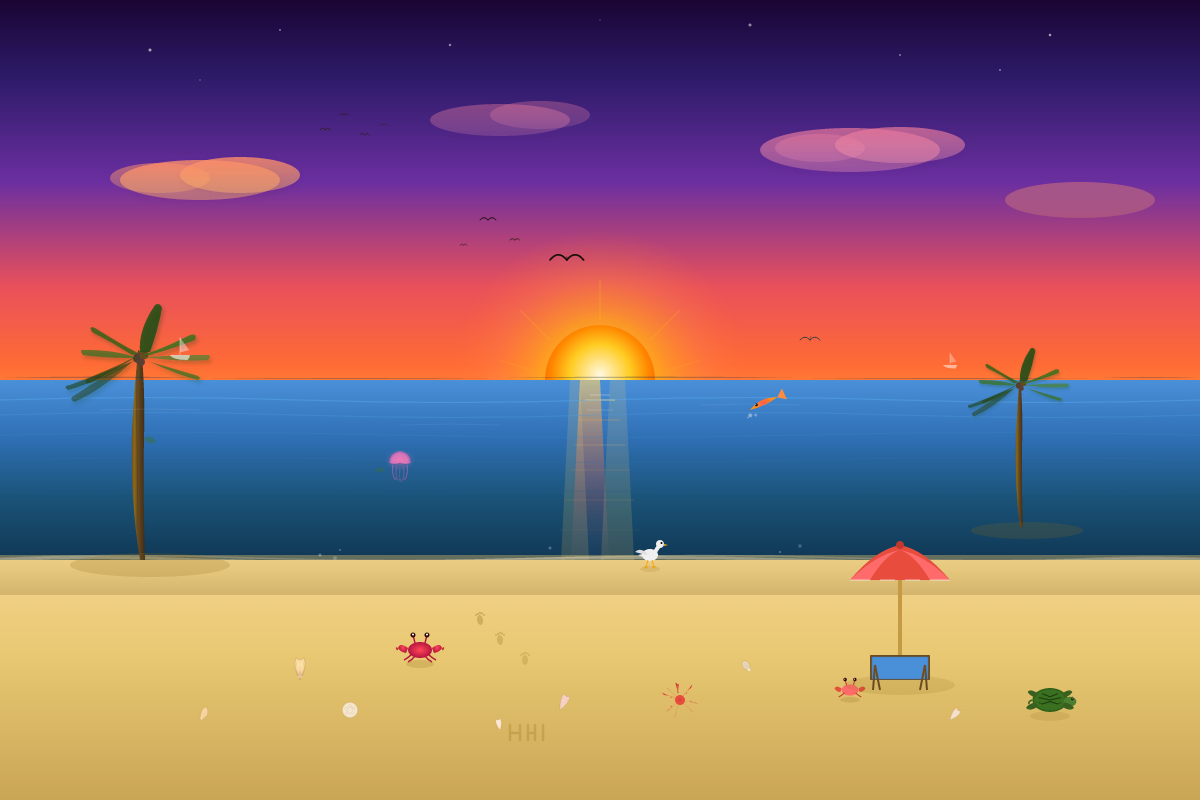
The sunset, palms, birds and beach animals create a cheerful, readable scene. Clean silhouettes and a vivid sky establish the composition, but construction remains schematic. The right palm appears rooted in open water, shadows have limited connection to the sunset, and the sun’s reflection consists of rigid bands. Small creatures and beach equipment are recognizable but minimally developed.
| Category | Muse Spark 1.3 | LongCat-2.0 |
|---|---|---|
| Task & likeness | 6.5/10 | 7.5/10 |
| Anatomy & construction | 3.0/10 | 5.5/10 |
| Space & placement | 5.5/10 | 5.5/10 |
| Light & reflections | 6.5/10 | 6.0/10 |
| Purposeful detail | 5.0/10 | 5.0/10 |
| Artistry & character | 3.5/10 | 5.0/10 |
| Materials & effects | 3.0/10 | 3.0/10 |
| Visual integrity | 3.5/10 | 4.0/10 |
A busy shoreline at sunset tests scene composition, animal forms and the relationship between light and water reflections.
Physical reasoning, light and visual reconstruction.
Muse Spark 1.3
This benchmark has not been assessed yet.
LongCat-2.0
This benchmark has not been assessed yet.
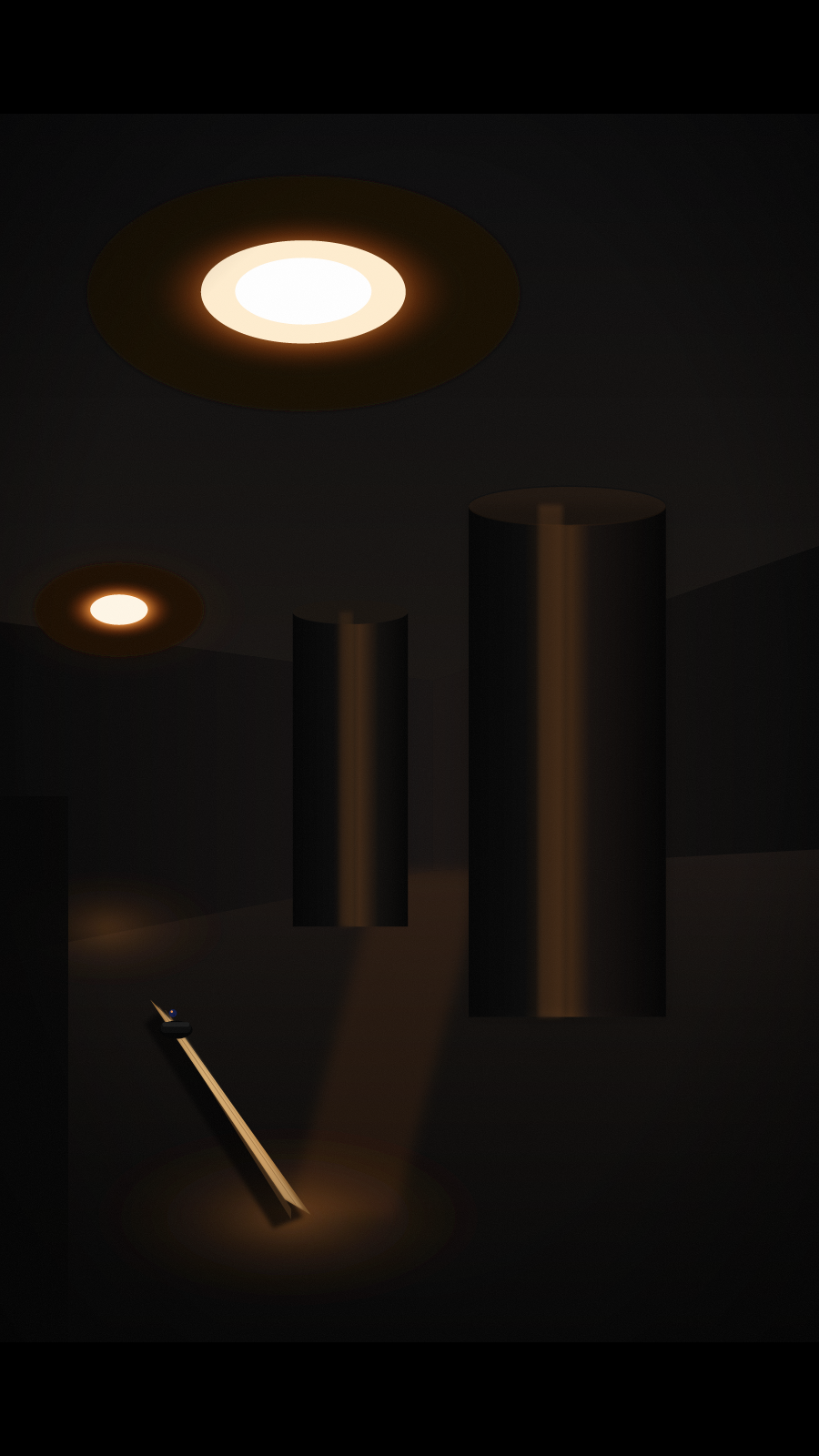
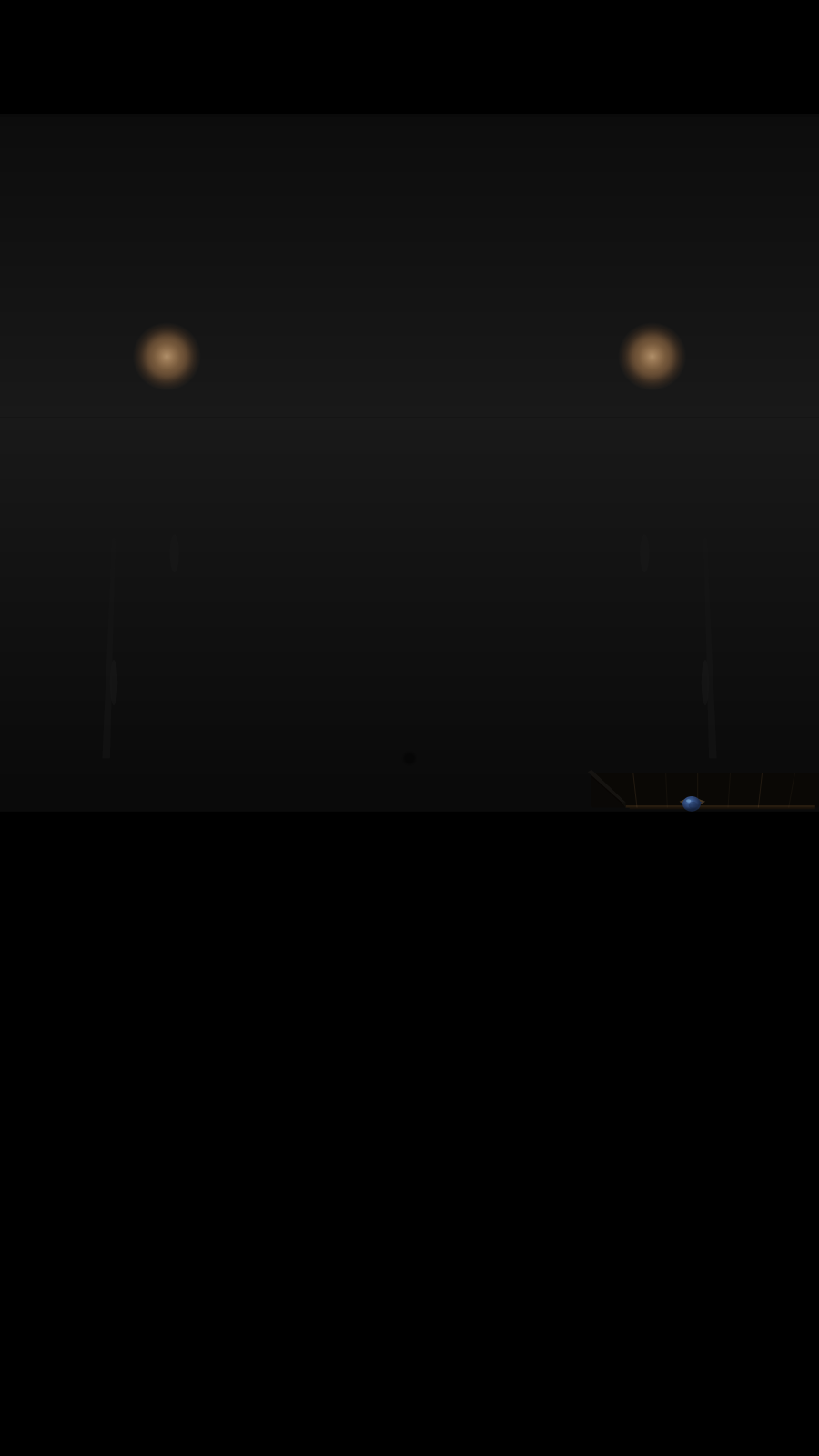
A plank, computer mouse and blueberry in a steel room test physical stability, spatial relationships, materials and lighting.
Scene composition and interacting subjects.
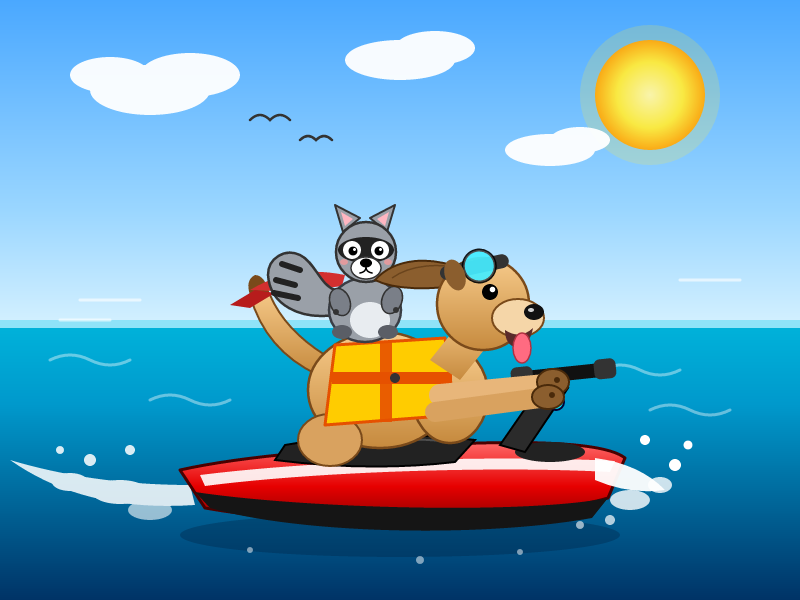
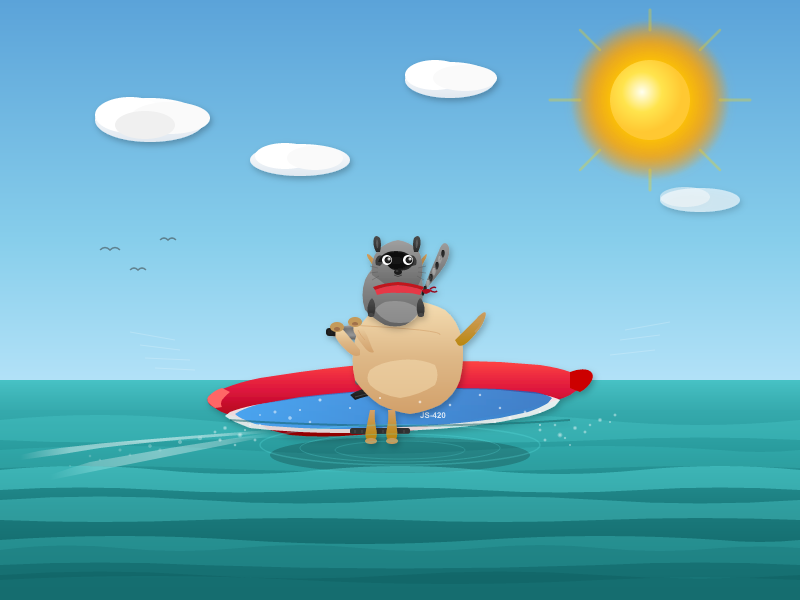
Muse Spark 1.3
The raccoon clearly rides on the dog's back, and the dog's paws reach the jet ski controls. Expressive faces and bright colors make the scene appealing. Simplified joints, crowded steering geometry and shallow hull perspective limit construction. The sun has no corresponding water reflection, and the splash shapes convey speed more clearly than convincing displacement.
LongCat-2.0
The raccoon is recognizable and expressive, with a clear mask and striped tail. The dog's anatomy is poorly resolved, and the flattened craft lacks convincing steering and seating. Feet extend below the hull, weakening the sense of support. An appealing palette, clean shapes and decorative water effects give the illustration some polish.
| Category | Muse Spark 1.3 | LongCat-2.0 |
|---|---|---|
| Task & likeness | 8.5/10 | 4.0/10 |
| Anatomy & construction | 6.0/10 | 3.0/10 |
| Space & placement | 7.0/10 | 4.5/10 |
| Light & reflections | 5.0/10 | 5.5/10 |
| Purposeful detail | 6.5/10 | 6.0/10 |
| Artistry & character | 5.0/10 | 3.0/10 |
| Materials & effects | 6.0/10 | 5.5/10 |
| Visual integrity | 6.0/10 | 5.0/10 |
A jet-ski scene pairs a canine driver with a raccoon passenger. It tests the placement and contact of interacting subjects, along with vehicle construction.
Subject construction and spatial relationships.
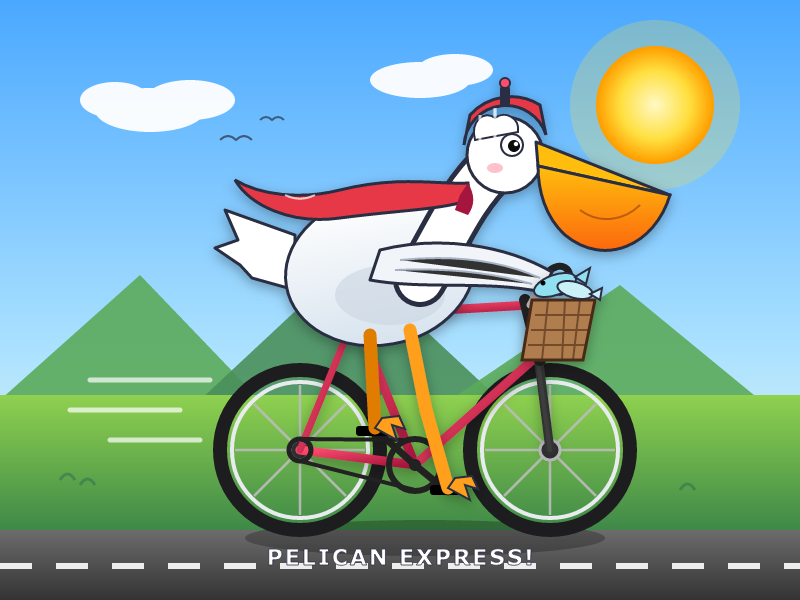
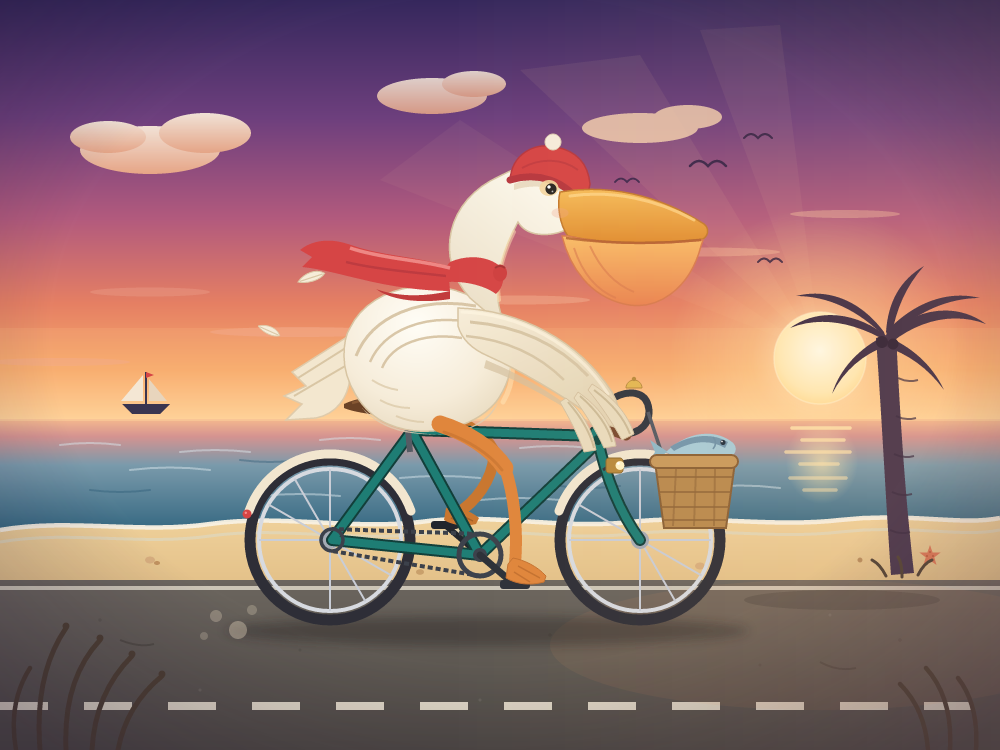
Muse Spark 1.3
The pelican and bicycle are immediately recognizable, with an expressive face, bold bill and cheerful composition. Both legs connect to the body and reach pedal-like supports, but articulation, saddle support and wing contact with the handlebar remain unclear. Wheel alignment and layering are coherent. Simple landscape shapes, generic shadows and limited material variation constrain the finish.
LongCat-2.0
A clearly recognizable pelican cycles through a well-composed coastal sunset. Warm colors, flowing scarf, feather contours and bicycle details give the illustration character. The legs connect to the body, but the farther foot's pedal contact and the wing's handlebar grip remain ambiguous. Clean vector shapes provide polish, with limited material texture and directional shading.
| Category | Muse Spark 1.3 | LongCat-2.0 |
|---|---|---|
| Task & likeness | 8.5/10 | 8.5/10 |
| Anatomy & construction | 6.0/10 | 7.0/10 |
| Space & placement | 7.0/10 | 8.0/10 |
| Light & reflections | 6.0/10 | 7.5/10 |
| Purposeful detail | 7.0/10 | 8.0/10 |
| Artistry & character | 5.5/10 | 8.5/10 |
| Materials & effects | 6.5/10 | 7.0/10 |
| Visual integrity | 7.0/10 | 8.5/10 |
A cycling pelican tests anatomy, riding posture and contact between the bird and the bicycle.