STEALTHMARK · PHYSICS AND SPATIAL REASONING
Newton’s Mirror
Can a model keep physics, perspective and recursive reflections consistent in one SVG?
One scene. Connected constraints.
A convincing surface is only part of the task. We judge the physical state, camera placement, reflection geometry and materials together. A model must carry the same scene through every reflection.
Newton’s Mirror has the greatest influence on the current StealthMark score. Its reasoning categories also provide the main evidence for General Intelligence.
Inspect the reasoning
Follow the reflected shapes and compare their positions. Inconsistent geometry reveals where the model loses track of the scene, even when the rendered scene looks polished.
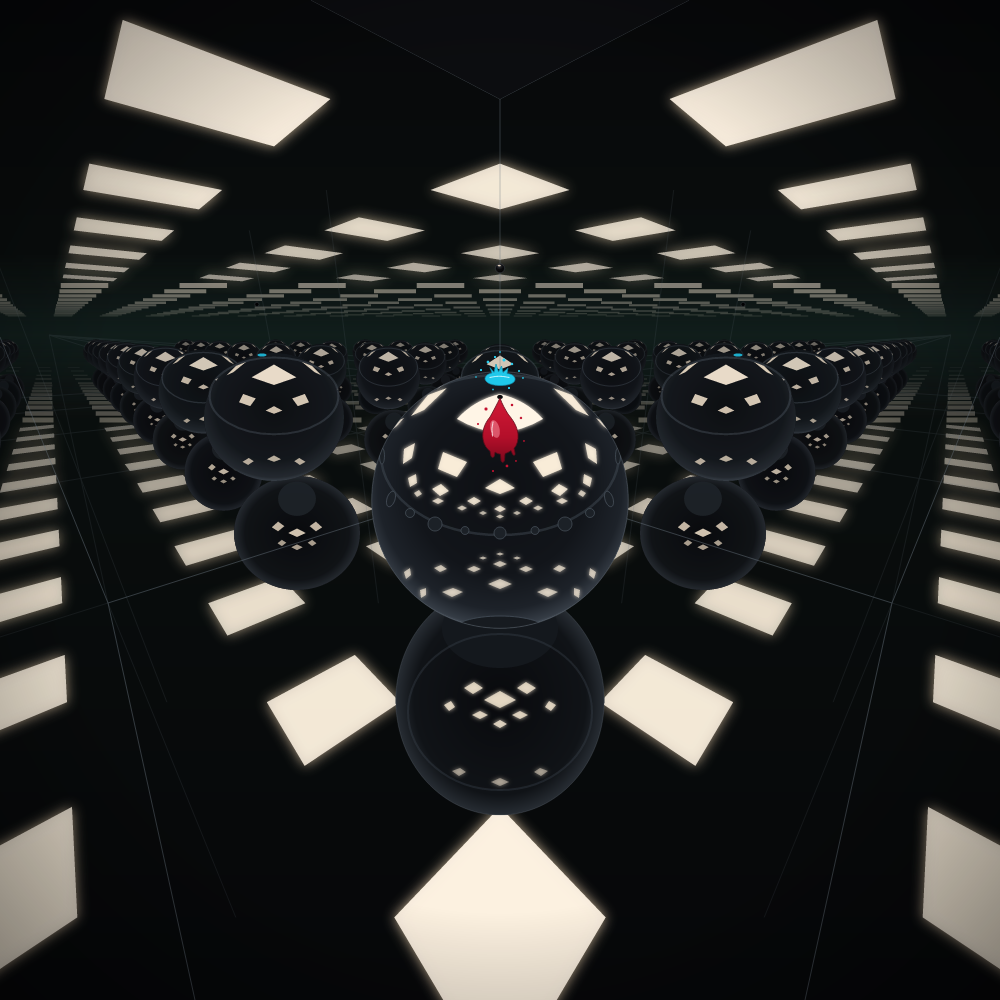
Claude Fable 5.2 72.5/100
Researcher observations
The composition closely preserves the principal camera relationships. Visible cyan contact, elongated crimson coating and separate airborne black paint support the required interaction sequence, with a small crimson transport overshoot. Correct broad mirror placement coexists with major omissions in nested spherical imagery and simplified emitter mapping. Core score: 105.5/170; floor-damage reward: 0/10; combined total: 105.5/180.
Benchmark task
A spinning metal sphere and paint in a mirrored room test physical reasoning, perspective and consistency across repeated reflections.
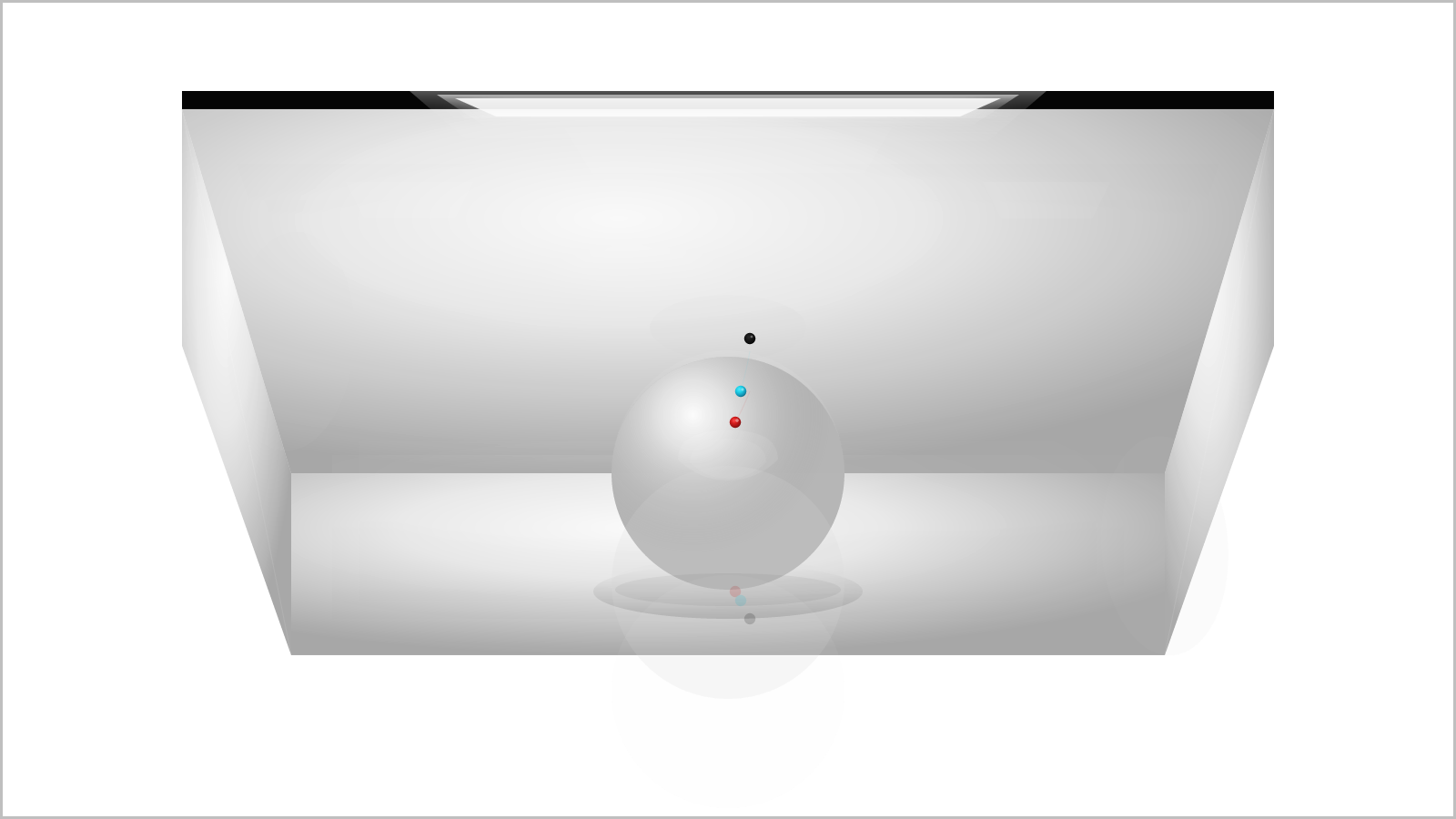
MAI-Thinking-1 8.0/100
Researcher observations
The small paint features and convex shading deserve moderate material credit. The sphere remains undersized and low, with black unusually close to its apex. Crimson and cyan do not establish the required impact histories. Faint reflected echoes supply limited optical evidence, while the defining recursive room, nested sphere and emitter structures remain unestablished.
Benchmark task
A spinning metal sphere and paint in a mirrored room test physical reasoning, perspective and consistency across repeated reflections.
Compare these models →All Newton’s Mirror results →