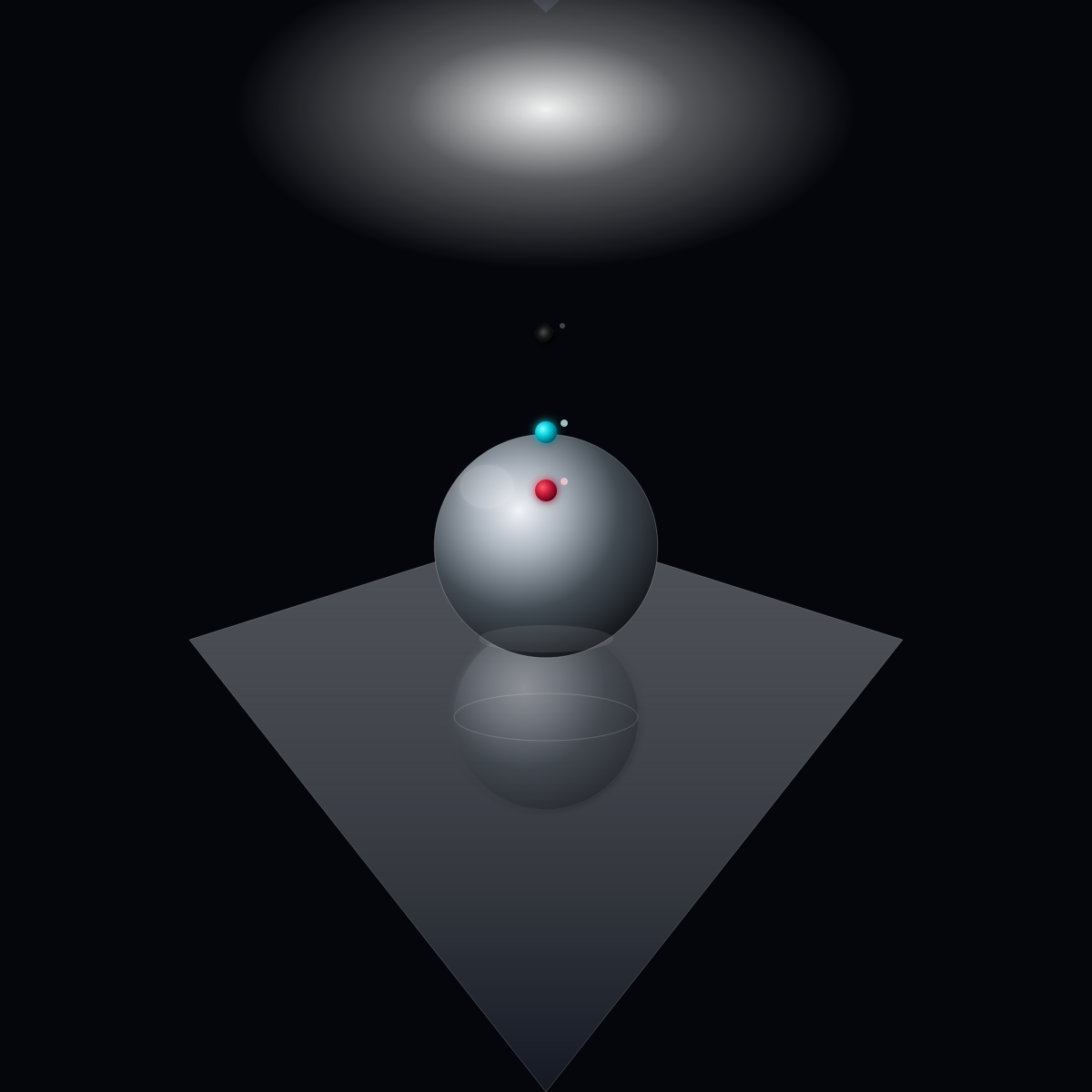
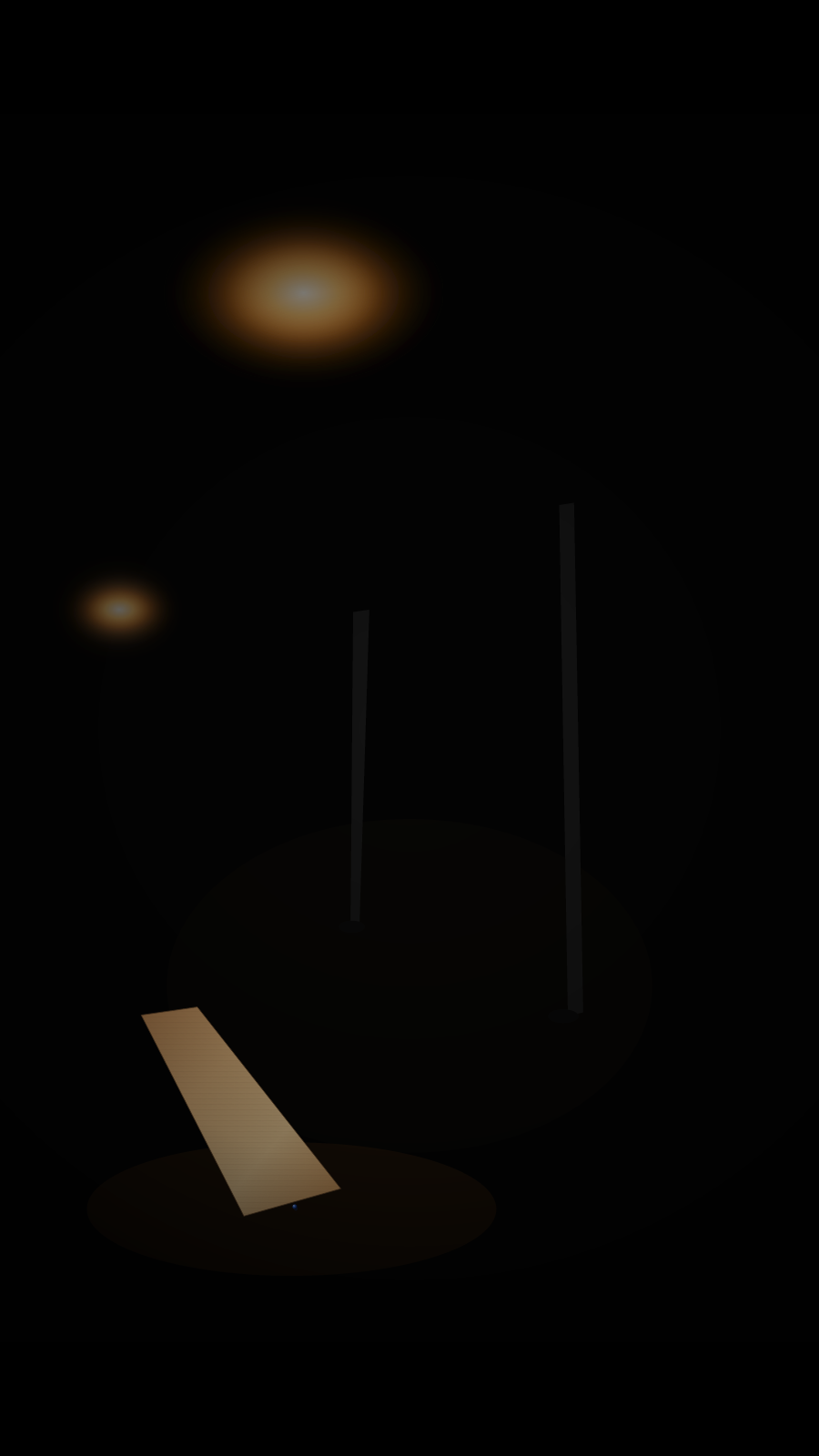
The centered sphere, separate airborne black blob and cyan-above-crimson ordering provide limited valid structure. The colored beads do not establish the required impact and transport histories. One dim floor image supports a small part of the optical system, while the defining wall repetitions, nested sphere imagery and emitter mappings are missing. Rounded volume and some gloss earn material credit, tempered by soft surface appearance and excessive paint-bead scale.
Benchmark task
A spinning metal sphere and paint in a mirrored room test physical reasoning, perspective and consistency across repeated reflections.
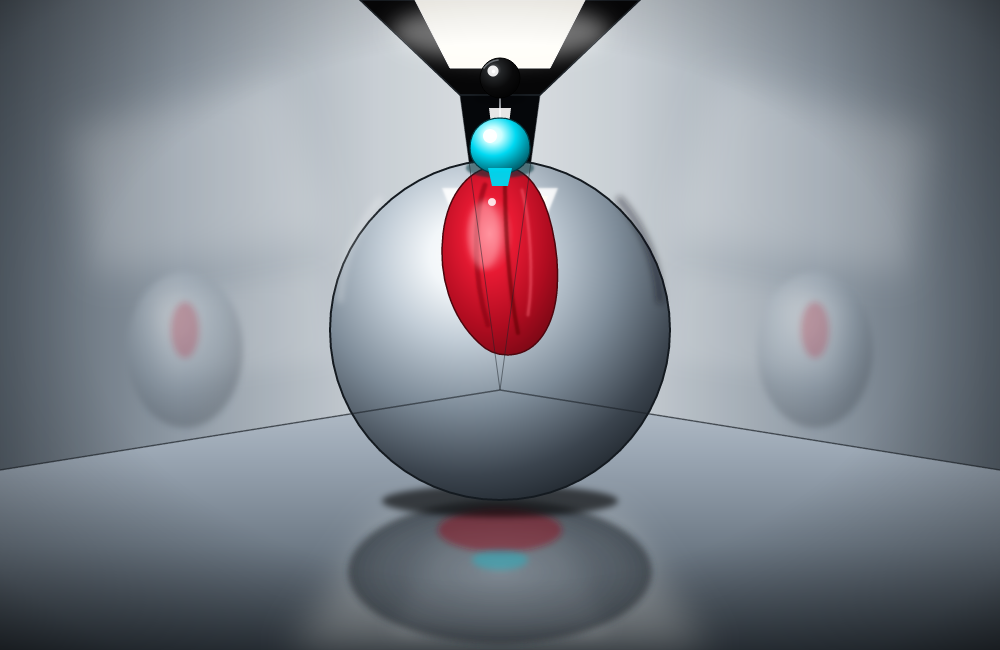
The paint state is incorrectly and poorly drawn, despite a recognizable sphere-and-paint setup. The oversized sphere, oversized compact paint bodies, and blurred wall and floor images further limit the result. Isolated reflection cues provide very little support for the required repeated virtual rooms, nested spherical imagery or emitter mapping.
Benchmark task
A spinning metal sphere and paint in a mirrored room test physical reasoning, perspective and consistency across repeated reflections.
An appealing purple character with a readable pleased expression and raised-moustache joke. Smooth shading and clean contours support the simple design, but indistinct mitten grips, minimally textured curls and an uncompressed strap weaken the requested physical interaction. The jelly suggests gloss more convincingly than translucency.
Benchmark task
A glossy purple jelly struggles with an oversized fake moustache at a playful checkpoint. The scene tests comic expression, physical contact and the appearance of a soft translucent body.
The luminous creature and geometric mirror counterpart communicate self-recognition through a coherent palette and expressive eyes. The transformed reflection is purposeful. Simple oval anatomy, ambiguous reaching-arm construction, shallow spatial staging and limited illumination of nearby surfaces keep the illustration below exceptional execution.
Benchmark task
An imagined creature encounters its reflection. The scene tests original character design, visual self-interpretation and the relationship between a subject and its reflected image.
Clean contours, connected body forms and gentle gradients support a basic, coherent portrait. Likeness remains weak: the face dominates the body, the seated angle is lost, and crossed hands become dark lobes without traceable wrists or fingers. Readable facial details add some drawing complexity, but clothing, landscape and material treatment remain sparse.
Benchmark task
An SVG interpretation of the Mona Lisa tests facial likeness, anatomy and the composition of a familiar portrait.
Dark hair, a restrained smile and overlapping hands suggest Mona Lisa, but replication is weak. The face is markedly elongated, the hands are oval pads with faint finger strokes, and the atmospheric landscape is absent. Soft gradients provide basic volume, while the frontal symmetry, shallow space and sparse clothing detail limit the portrait’s drawing quality.
Benchmark task
An SVG interpretation of the Mona Lisa tests facial likeness, anatomy and the composition of a familiar portrait.
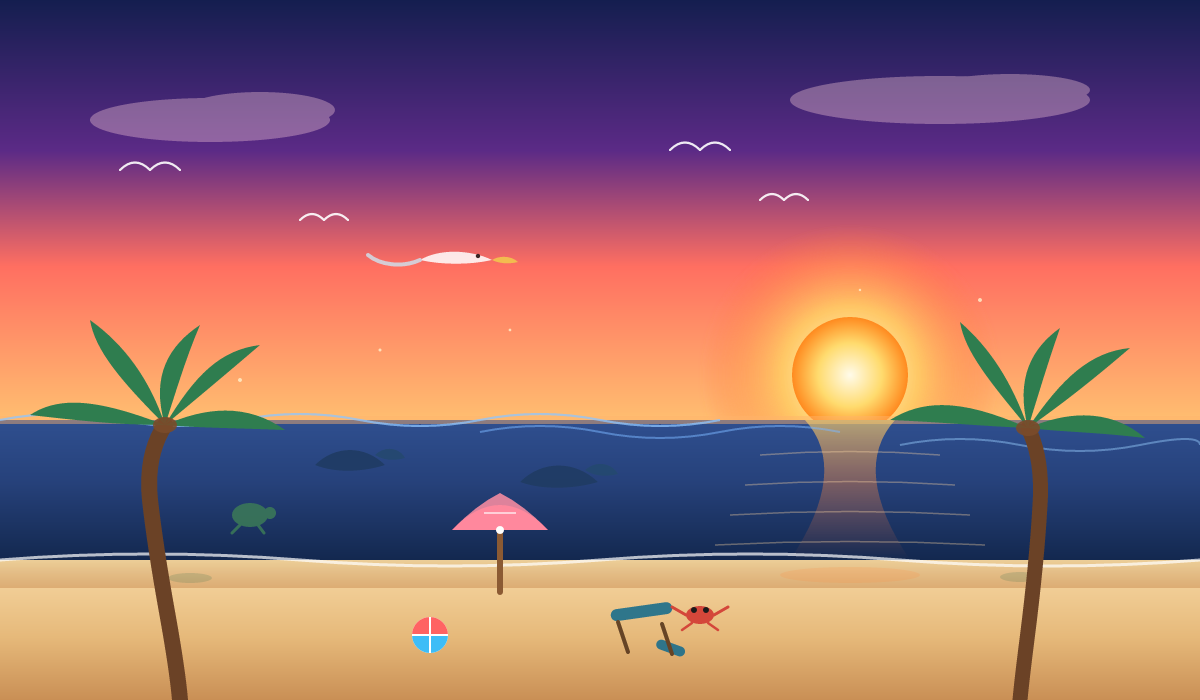
A coherent sunset beach with clear requested subjects, balanced framing and clean shapes. The aligned solar reflection and warm gradients establish atmosphere. Primitive animal construction, ambiguous furniture, sparse depth cues and minimally developed surfaces limit its drawing complexity and physical richness.
Benchmark task
A busy shoreline at sunset tests scene composition, animal forms and the relationship between light and water reflections.
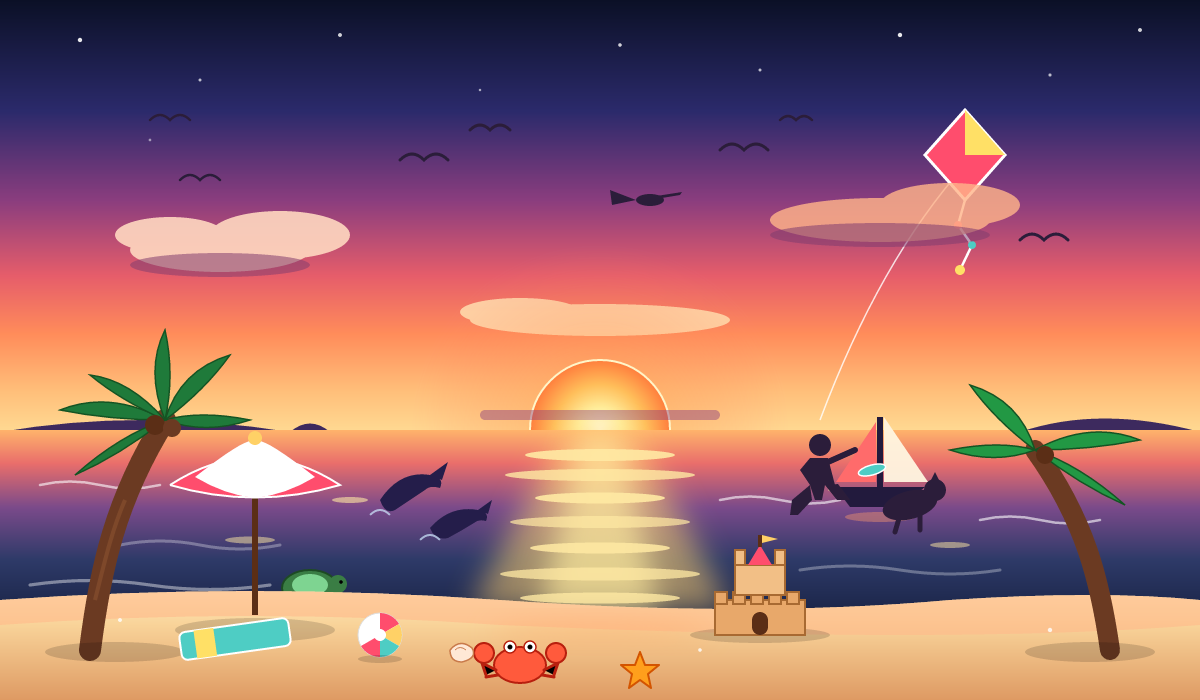
The warm sunset, framing palms and colorful beach accessories create an appealing scene with the requested animals, birds and reflections. Construction remains schematic: the raised hand misses the kite string, and a doglike silhouette hangs above the water without clear support. The sun reflection establishes a focal path, but shadows and materials lack depth. An unexplained horizontal bar crosses the sun.
Benchmark task
A busy shoreline at sunset tests scene composition, animal forms and the relationship between light and water reflections.
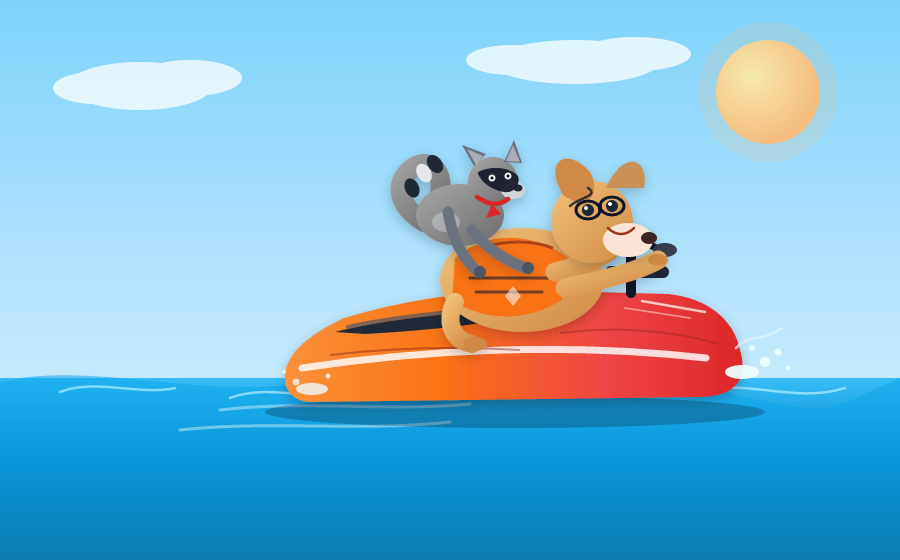
The requested interaction reads clearly through recognizable animals, expressive faces and a coherent hull-water relationship. Clean curves and readable accessories give the cartoon polish. Partly unresolved grips and supporting contacts limit physical construction; modest shape complexity, weak directional lighting and schematic water constrain its finish.
Benchmark task
A jet-ski scene pairs a canine driver with a raccoon passenger. It tests the placement and contact of interacting subjects, along with vehicle construction.
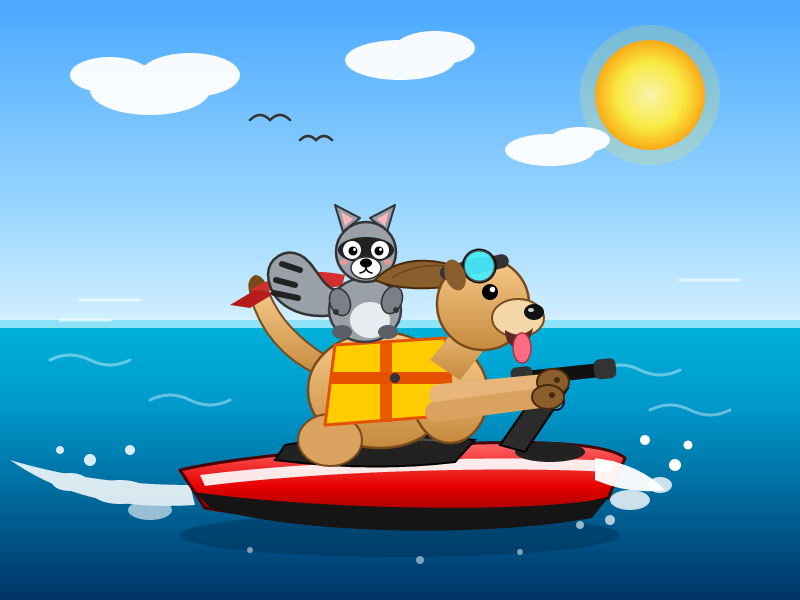
The raccoon clearly rides on the dog's back, and the dog's paws reach the jet ski controls. Expressive faces and bright colors make the scene appealing. Simplified joints, crowded steering geometry and shallow hull perspective limit construction. The sun has no corresponding water reflection, and the splash shapes convey speed more clearly than convincing displacement.
Benchmark task
A jet-ski scene pairs a canine driver with a raccoon passenger. It tests the placement and contact of interacting subjects, along with vehicle construction.
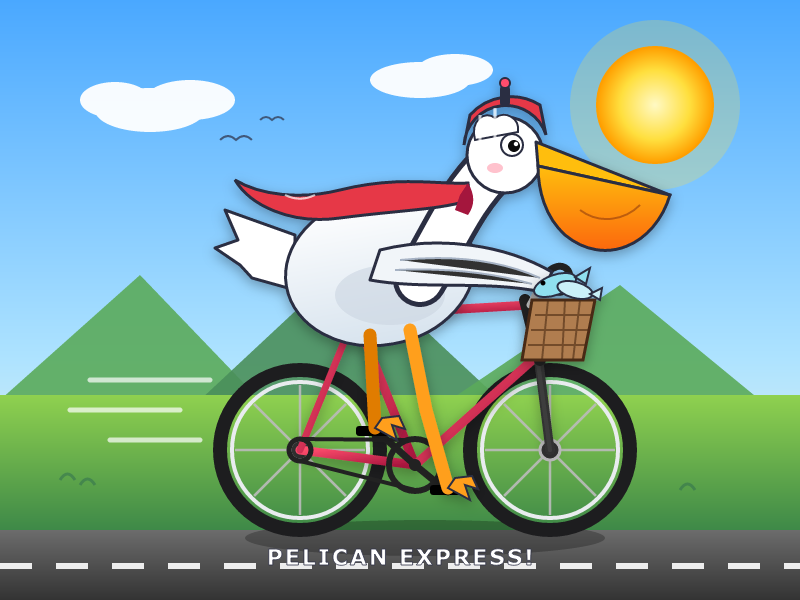
A coherent, cheerful illustration with recognizable pelican features, balanced composition, clean contours and useful small details. Its controlled curves and layered wheels demonstrate competent drawing skill. Ambiguous pedal and steering contacts, sparse drivetrain construction and weak directional lighting limit the riding mechanics and finish.
Benchmark task
A cycling pelican tests anatomy, riding posture and contact between the bird and the bicycle.
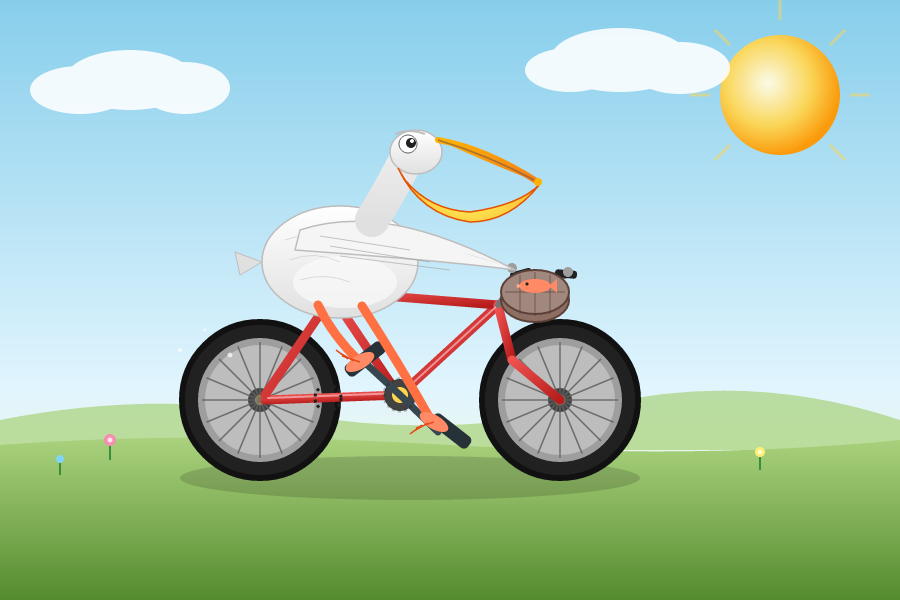
The pelican and bicycle are immediately recognizable, with an expressive face, bold bill and cheerful composition. Both legs connect to the body and reach pedal-like supports, but articulation, saddle support and wing contact with the handlebar remain unclear. Wheel alignment and layering are coherent. Simple landscape shapes, generic shadows and limited material variation constrain the finish.
Benchmark task
A cycling pelican tests anatomy, riding posture and contact between the bird and the bicycle.