Benchmark task
A whale and a tiny shrimp examine one another through bubble lenses, with an octopus nearby. The scene tests interacting characters, differences in scale and transparent materials.
First run
MODEL BENCHMARKS
Pairs a sparse reasoning backbone with 196B parameters of token-indexed Engram memory. Its encoder-decoder design sharply reduces the KV cache needed for long context.
DATASHEET
A good fit forAgents that repeatedly read large documents, codebases or conversation histories. Engram host-memory offload is useful when GPU memory is the constraint.
DeepSeek-V4.1-FlashOther modelsMedian
deepseek-v4.1-flashAlibaba Cloud Model Studio; input 0.283 USD/1M; cached read 0.03/1M; output 1.131/1M; Representative busy-period rate; documented idle-period rates are lower and region-specific.
per 1M tokens
deepseek/deepseek-v4.1-flashper 1M tokens
Available
deepseek-v4.1-flashdeepseek/deepseek-v4.1-flashdeepseek/deepseek-v4.1-flashdeepseek-v4.1-flashHost RAM offload with asynchronous prefetch is supported; GPU residency depends on the serving engine and configuration.
Engram stores token-indexed vectors that can be prefetched from system RAM.
An independent NVMe implementation also exists; its reported performance has not been reproduced by us.
The released Engram tables occupy about 203GB including scales. Other checkpoint tensors occupy about 308GB, before KV cache and runtime overhead. These are storage footprints, not minimum VRAM requirements.
Our speed measurement: 241.83 tokens/s on average, from 195.52 to 311.35 tokens/s.
226.6 tokens/s decode
How StealthMark scores models · General and Visual Intelligence
Benchmark results
Model IDdeepseek/deepseek-v4.1-flash

A whale and a tiny shrimp examine one another through bubble lenses, with an octopus nearby. The scene tests interacting characters, differences in scale and transparent materials.
First run

An SVG interpretation of the Mona Lisa tests facial likeness, anatomy and the composition of a familiar portrait.
First run

A busy shoreline at sunset tests scene composition, animal forms and the relationship between light and water reflections.
First run

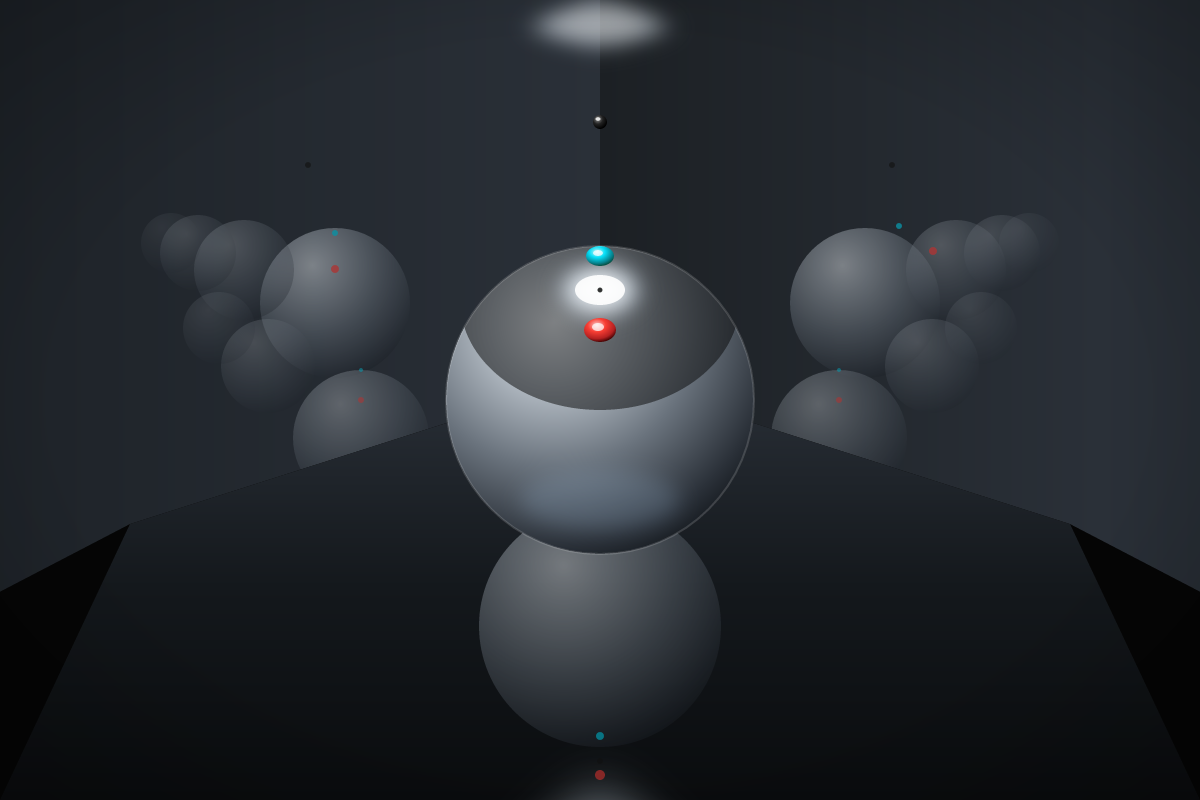
A spinning metal sphere and paint in a mirrored room test physical reasoning, perspective and consistency across repeated reflections.
First run

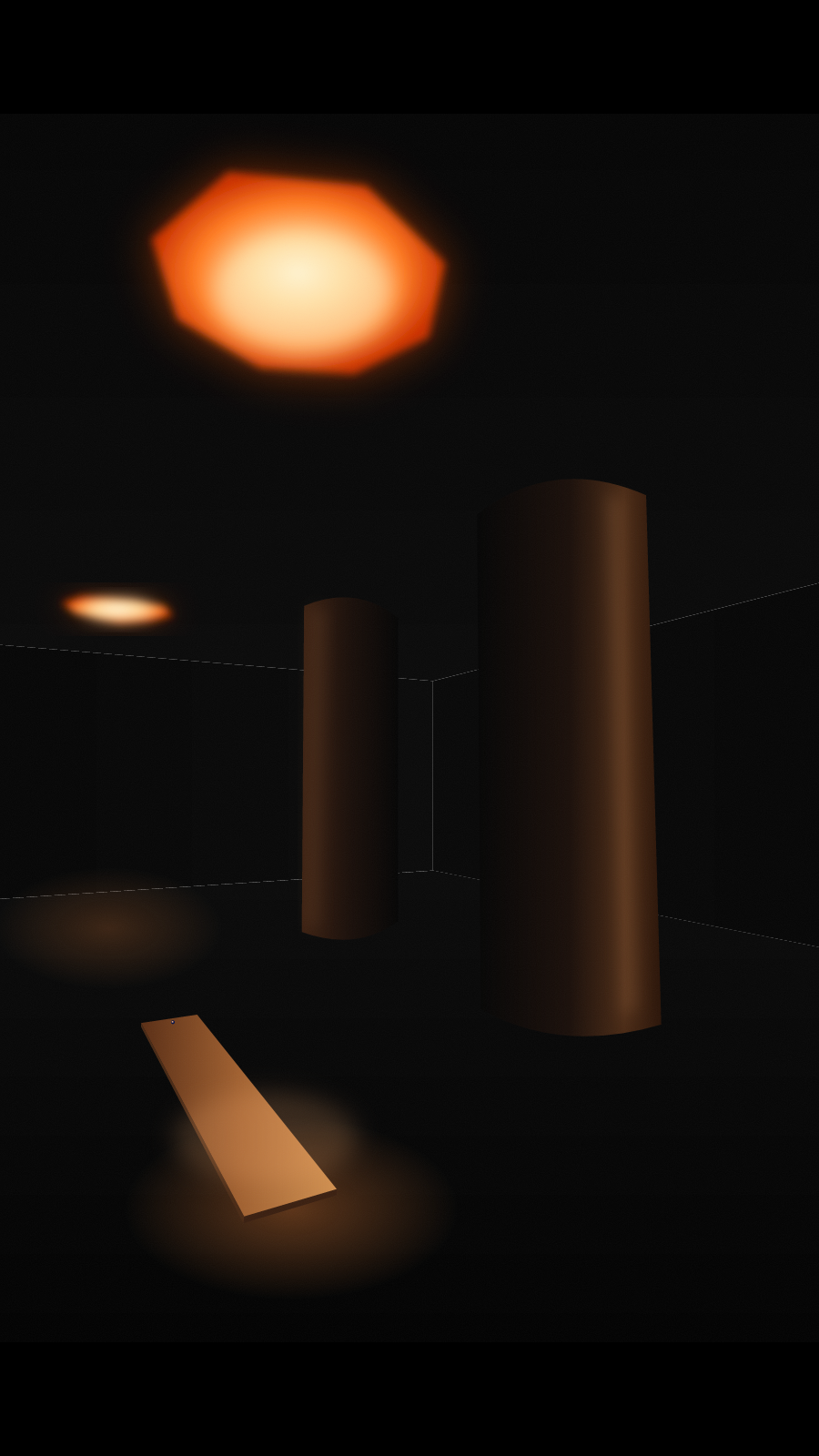
A plank, computer mouse and blueberry in a steel room test physical stability, spatial relationships, materials and lighting.
First run

A jet-ski scene pairs a canine driver with a raccoon passenger. It tests the placement and contact of interacting subjects, along with vehicle construction.
First run

A cycling pelican tests anatomy, riding posture and contact between the bird and the bicycle.
First run


Try another task or widen your model selection.
StealthMark measures how well a model’s abilities carry over to original, demanding tasks it could not have trained for: physical and spatial reasoning, planning across many steps, and precise visual work. How StealthMark works explains every benchmark, what it tests and why it is hard.
The ability to reason, plan, solve problems and understand how things relate and behave. A high score means it thinks hard problems through, from careful analysis to plans that span many steps.
The ability to understand visual intent and turn ideas, descriptions and plans into coherent, effective visuals. A high score means design ideas come out the way you meant them, in illustrations, icons, diagrams or interface visuals.
Overall shows how well a model’s abilities carry over to original, demanding tasks, weighting every benchmark into one score. Estimated means the total includes an estimate for one missing scene.
Scores reflect how well each result meets the benchmark requirements. Game scores come from the recorded play: the points earned on each level and how each level ended. How StealthMark keeps scores honest.
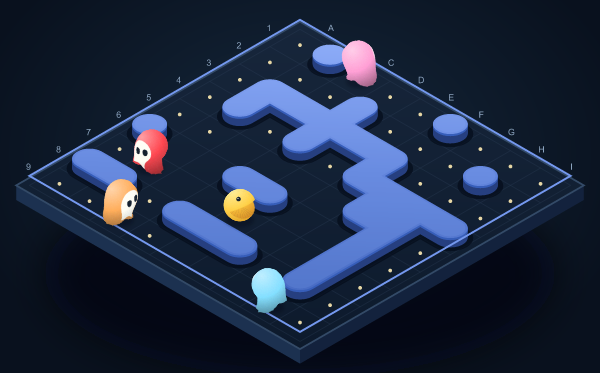
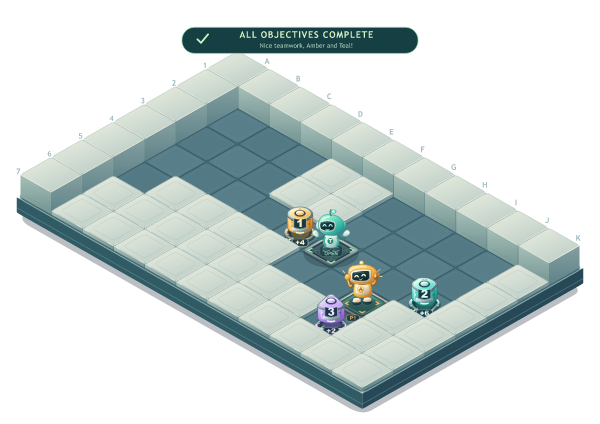
Each game is a sequence of levels, and earlier moves carry into later levels. A level that was not played is shown as not played and never counts as zero. Play every level of Latch or Foresight yourself to get a score calculated like the models’.
Good results with little thinking score high. On each task, a model’s result and reasoning tokens are compared with every other model and combined with the Balanced Integration Score (Liesefeld & Janczyk, 2019); 50 is average. Single step shows how much reasoning a model needs to understand and solve one problem, multi-step how efficiently it keeps working on a task by building on its earlier reasoning, as in agentic workflows. Not part of StealthMark.
How much StealthMark a model delivers for its money, in StealthMark points per dollar: its overall score divided by what one benchmark task costs it on average. The cost is what our runs were charged, or their tokens at the model’s list price; benchmarks a model has not run yet are estimated from its other costs. Like StealthMark, it is absolute and compares with no other model. Not part of StealthMark.